


This is not a “new brand beats PUMA” piece. That would be unrealistic. PUMA Safety is established, technically detailed, and easier to trust at first glance.
XNEXZ is a new UK challenger brand still building its reputation. So the smarter question is not which brand is bigger, it is which shoe makes more sense for the right buyer.
That is the angle of this comparison: honest use cases, real strengths, real limitations, and a personal opinion from the point of view of someone who actually cares how safety shoes feel after a long shift.
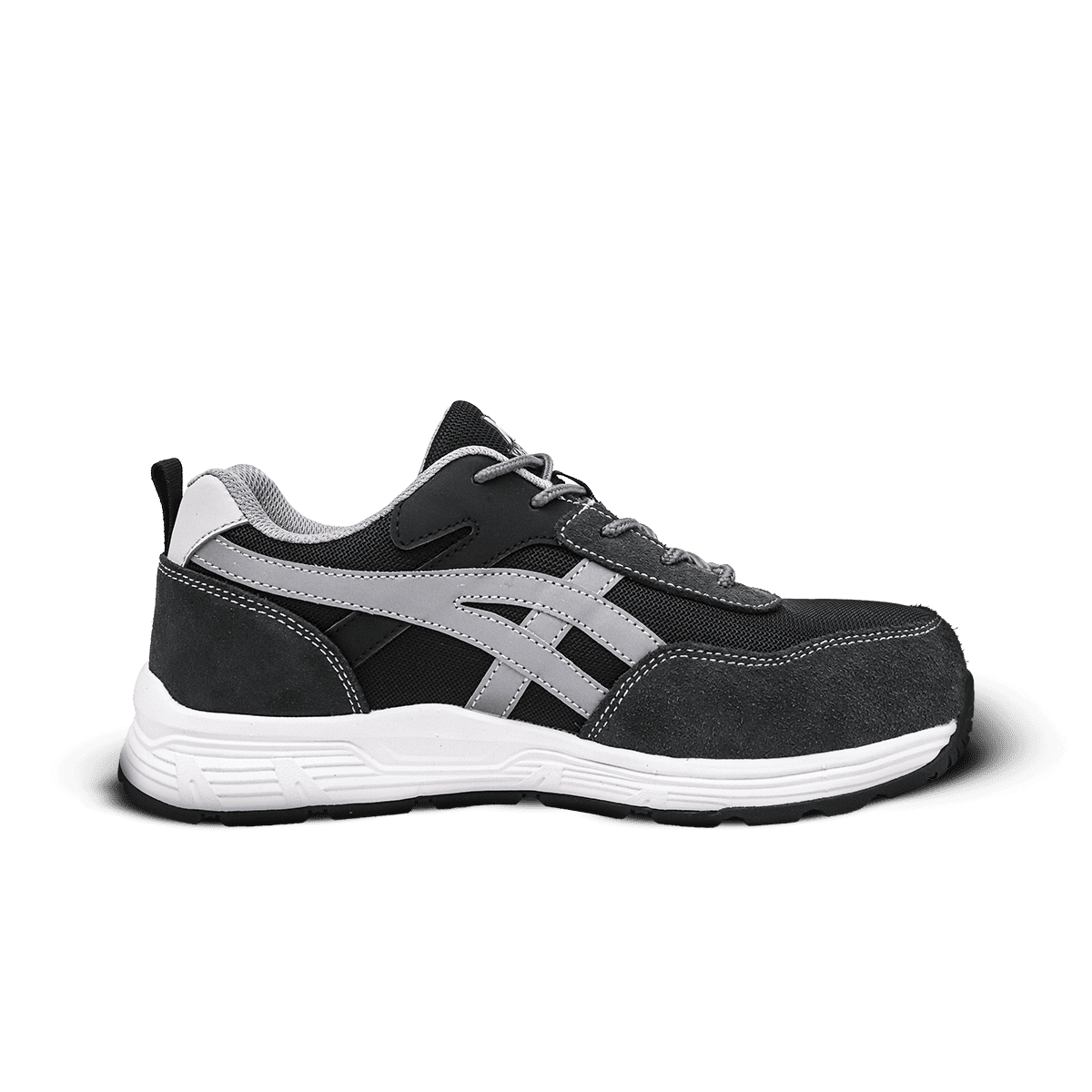
XNEXZ StrideX
New UK safety trainer with aluminium toe, Kevlar midsole, EVA + rubber outsole, and a modern black trainer look.
- Designed to feel less bulky and more wearable day to day.
- Clear direct price point and simple product story.
- Interesting for workers who want certified protection without a heavy industrial vibe.

PUMA Safety Chase Low
Established sport-inspired safety shoe with fiberglass cap, flexible penetration protection, ESD focus, and PUMA Safety engineering.
- Stronger technical depth and a more mature safety-footwear system.
- Broader sizing and easier trust for company buyers.
- Better fit for buyers who want a proven technical brand first.
PUMA clearly leads here. It has the stronger market history, wider range, and easier buying confidence.
StrideX is appealing if you want a clean S1P trainer look, flexible protection, and a direct-to-worker price point.
Neither shoe wins for every worker. The better choice depends on your job, fit priorities, and how much brand maturity matters to you.
My honest personal take: PUMA Chase Low looks like the more proven technical product on paper. XNEXZ StrideX feels like the more personal, style-aware, challenger-brand option, and for some workers, that is exactly the sweet spot.
The Real Match-Up
On paper, both shoes sit inside the same broad S1P conversation: lightweight trainer-style safety footwear for dry working environments where toe protection and underfoot protection matter. But the feeling behind each product is very different.
PUMA Safety Chase Low comes from an established safety-footwear ecosystem. The official PUMA page highlights a fiberglass cap, FAP penetration protection, ESD protection, an Evercushion BA footbed, BreathActive functional lining, and a Motion Impulse sole system. In simple words: PUMA is telling you this is a technically developed work trainer with a lot of engineering behind it.
XNEXZ StrideX takes a different route. The brand story is not about being the biggest. It is about making safety shoes feel less punishing for hardworking people who spend all day on their feet. StrideX uses a 200J aluminium toe cap, a puncture-resistant Kevlar midsole, a breathable mesh and microfiber upper, and an EVA + rubber outsole. The pitch is simpler, but also more human: proper S1P protection in a shoe that feels easier to live with.
That is why this comparison is interesting. One product wins with established engineering. The other tries to win with usability, style, and a more personal brand point of view.
Detailed In-Depth Comparison Table
| Factor | XNEXZ StrideX | PUMA Safety Chase Low | Honest Take |
|---|---|---|---|
| Protection Class | S1P | S1P | Both sit in the S1P lane for dry indoor/light trade work. |
| Toe Cap | 200J aluminium toe cap | Fiberglass cap | Both avoid steel. StrideX is simple and light; PUMA is more technical. |
| Underfoot Protection | Kevlar puncture-resistant midsole | FAP flexible penetration protection | Both focus on flexible puncture protection. |
| Upper | Breathable mesh + microfiber | Textile upper with breathable lining | Both favour breathable trainer-style comfort. |
| Outsole | EVA + rubber, anti-slip, oil-resistant | Motion Impulse rubber outsole with cushioning-focused midsole | PUMA has the deeper outsole story; StrideX keeps it simple. |
| Electrical Focus | Anti-static | ESD focus highlighted on official product page | PUMA is stronger if ESD detail matters. |
| Slip / Traction Story | Grippy EVA + rubber outsole for varied indoor surfaces | Slip-resistant outsole with stronger technical backing | Both target grip; PUMA explains it more deeply. |
| Comfort Story | Shock-absorbing heel, lighter build idea, breathable trainer feel | Evercushion BA footbed, BreathActive lining, dual-density style cushioning story | PUMA looks more advanced; StrideX stays minimal. |
| Style Identity | Clean black trainer look | Sport-performance safety trainer look | StrideX is quieter; PUMA is more branded and athletic. |
| Price Position | £79.97 direct price | Higher official price positioning, depending on market and retailer | StrideX wins value; PUMA charges for maturity and trust. |
| Size Range | UK 7–11 on current product description | Broader size range on official page | PUMA has the practical size-range advantage. |
| Brand Maturity | New UK brand | Established international safety-footwear brand | PUMA has the stronger brand-history advantage. |
Where PUMA Clearly Deserves Respect
Let’s be fair: PUMA Safety is not winning this comparison because of hype. It wins real points because the product story is deeper and more proven. The Chase Low looks like the safer recommendation if you are a procurement manager, a company buyer, or a worker who wants a shoe from a brand with a long track record.
Choose PUMA If You Want:
- A mature safety-footwear brand with easier buying confidence.
- Metal-free thinking and a fiberglass-cap setup.
- A more technical cushioning and comfort story.
- Clear ESD emphasis on the official product page.
- Broader size availability and a more established retail network.
My Practical Reading
If I were advising a business that needs a simple, low-risk brand recommendation, I would understand why PUMA would be the easier answer. It feels safer politically inside a team-buying or procurement environment.
Where XNEXZ StrideX Finds Its Sweet Point
StrideX becomes interesting when the buyer is not looking for the biggest technical spec story in the room. It makes sense for the worker who wants a certified S1P trainer that looks clean, feels less intimidating, and comes from a brand speaking directly to everyday wearability.
I think this is the most important XNEXZ angle: the brand is not trying to out-corporate PUMA. It is trying to make safety footwear feel more personal. The founder’s point of view — that hardworking people give to everyone else and often tolerate uncomfortable essentials for themselves — gives the product a different emotional starting point.
That does not replace safety. It simply changes the tone of the purchase. Instead of “here is another technical work shoe,” the StrideX message is more like: “Here is a practical safety trainer that also respects how you feel at the end of the day.”
Comfort And Long-Shift Feel
Comfort is where many comparison articles become fake. They act like they have done a lab test when really they are just repeating marketing words. So here is the honest version.
PUMA looks stronger on paper. The combination of Evercushion BA footbed, BreathActive lining, and Motion Impulse sole technology suggests a more developed underfoot comfort system. If you like the idea of sport-inspired cushioning translated into safety footwear, PUMA is the more convincing technical story.
StrideX, however, still makes sense for long-shift buyers because the comfort logic is clear and believable: lighter aluminium toe, flexible Kevlar protection, breathable upper, shock-absorbing heel, and a trainer shape that should feel less clunky than old-school bulky boots. That may be enough for warehouse workers, delivery staff, maintenance teams, indoor trades, hospitality back-of-house workers, and security staff.
So my honest line is simple: if comfort engineering is your absolute number-one priority, PUMA looks better on paper. If your buying triangle is comfort + style + price clarity, StrideX becomes a compelling challenger option.
PUMA Chase Low Strength Areas
XNEXZ StrideX Strength Areas
Style And Identity
This is subjective, but it matters more than some “serious” reviewers admit. Workers wear these shoes every day. A safety trainer is part of the daily uniform, the daily mood, and sometimes the daily confidence too.
PUMA Chase Low has a more athletic performance vibe. It is more branded, more energetic, and visually more “technical.” That will appeal to workers who like the sport-shoe DNA and want that identity in their PPE.
StrideX is quieter. The black-and-white look is easy to wear and does not scream “industrial safety shoe” from across the room. That is exactly where XNEXZ can earn attention: not by being louder, but by being easier to wear visually.
The Buyer-Risk Question
Here is the real-world question most comparison articles avoid: how risky does the purchase feel?
Buying PUMA feels low-risk because the brand already carries authority. Buying XNEXZ requires more openness because the brand is still new. That does not make StrideX a bad option. It just means XNEXZ has to earn trust through honest positioning, clear use cases, fair support, and real customer feedback — not fake hype.
In some ways, that honesty is actually the brand’s advantage. XNEXZ does not need to pretend it is bigger than PUMA. It simply needs to be the better fit for a specific kind of buyer.
My Expert Personal Opinion
I would not tell every worker to buy StrideX over PUMA. That would be lazy advice. But I would absolutely tell the right worker to take StrideX seriously.
If you work in dry indoor environments, want S1P protection, prefer a cleaner trainer look, and like the idea of supporting a new UK safety footwear brand with a more human point of view, StrideX has a real argument. It is approachable, visually smart, and easier to understand.
If metal-free design logic, ESD-related detail, broader sizing, and stronger technical product maturity matter more to you, PUMA Chase Low is the more comfortable recommendation.
Who Should Buy Which?
| Buyer Type | Better Fit | Why |
|---|---|---|
| Warehouse picker or packer | Either | PUMA for brand trust and technical comfort story; StrideX for value, simple style, and a more direct product feel. |
| Small business owner buying for a few staff | StrideX Worth Testing | The direct price and clear feature set make it easier to trial without jumping into a large corporate buying system. |
| Large procurement team | PUMA | Brand maturity, broader size range, and deeper technical documentation reduce buying friction. |
| Style-conscious worker | StrideX | The quieter black trainer design feels cleaner and more wearable day to day. |
| Worker needing strong ESD emphasis | PUMA | PUMA communicates this more directly on the official product page. |
Final Verdict: Not Bigger, Just Different
PUMA Safety Chase Low is the stronger answer if your priority is proven brand trust, deeper technical detail, broader availability, and a product that feels easier to approve without questions. It deserves that respect.
XNEXZ StrideX is not trying to beat PUMA by pretending to be PUMA. Its real opportunity is different: a clean, modern S1P trainer with aluminium toe, Kevlar protection, a more personal brand voice, and a direct value-led price for workers who want safety shoes to feel less like punishment.
My final take: PUMA is the safer answer. StrideX is the more interesting answer. And if you are the kind of worker who wants a practical safety shoe that also feels a little more thoughtful and wearable, that “interesting” angle may be exactly the reason StrideX deserves a place in the conversation.


