


Two lightweight S1P safety trainers, both on the very latest standard, both built for light indoor work, and both keenly priced. The V12 VT201 Agile is a budget-friendly trainer from an established, award-winning UK brand.
The Xnexz StrideX is a metal-conscious alternative with a Kevlar midsole and strong consumer terms. Here's the honest, spec-by-spec breakdown.
Quick answer
The V12 Agile is the cheaper shoe (£58.79 inc VAT), carries the stricter PS puncture rating, and comes from an established, award-winning, carbon-neutral UK brand with a wider size range (UK 3–13). The Xnexz StrideX (£79.97) matches the same current 2022 standard, but is built to be more metal-detector-friendly (aluminium toe + non-metallic Kevlar midsole) and adds a 1-year warranty, a 90-day return and free next-day UK delivery. Want the lowest price and the stricter puncture rating? Choose the V12. Need a metal-conscious build and stronger consumer terms? The StrideX makes that case.
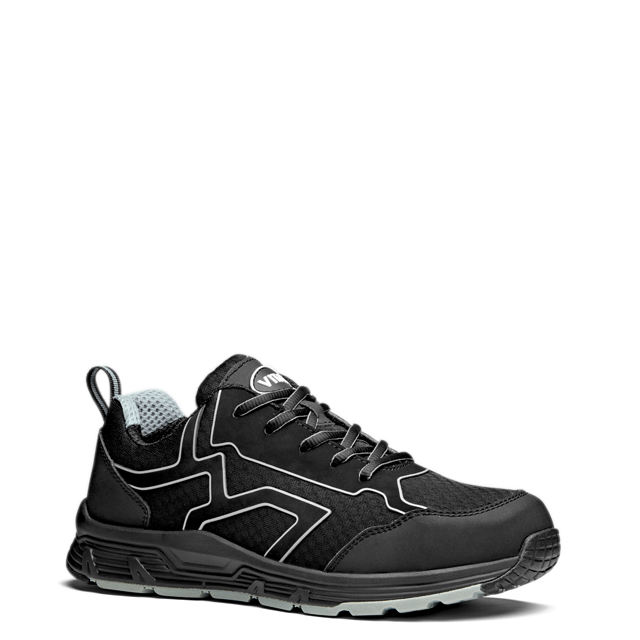
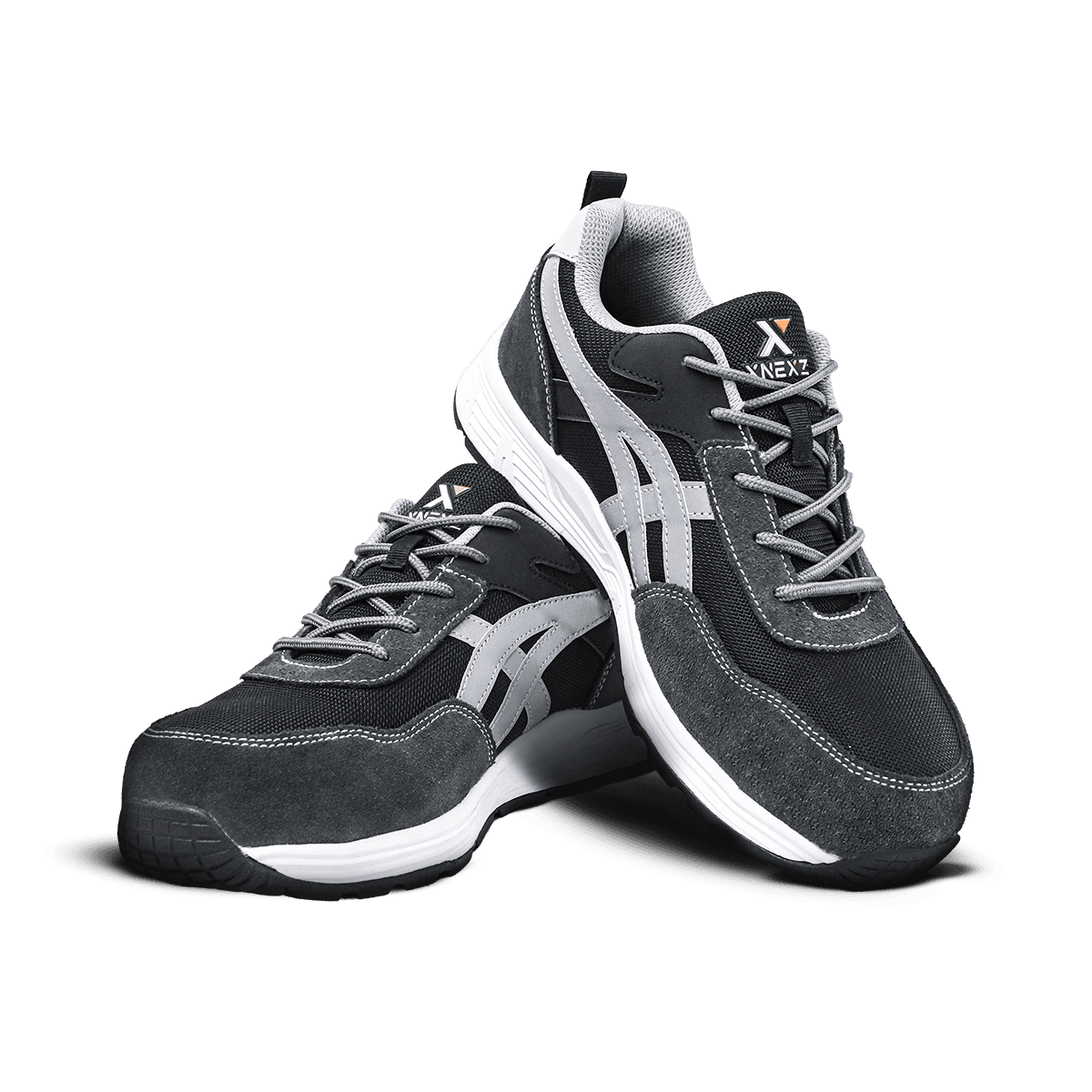
Two lightweight S1P trainers on the current EN ISO 20345:2022 standard - compared honestly below.
What's the difference between the V12 Agile and Xnexz StrideX?
They line up closely. Both are low-cut, lightweight safety trainers with a 200-joule toe cap, a non-metallic puncture-resistant midsole, a breathable mesh upper and a cushioned, slip-resistant sole. Both are certified to the current EN ISO 20345:2022+A1:2024 standard, both are antistatic, and both are aimed at the same job, light indoor work like warehousing, logistics, catering and retail. Neither is a heavy-duty or outdoor boot.
The differences are in the fine detail. The V12 wins on price and carries the stricter PS puncture rating from an established brand; the StrideX is engineered to be more metal-detector-friendly and backs the purchase with longer consumer cover. Here's how it breaks down:
Honest tally: the V12 leads on price, puncture rating, sizing and brand pedigree; the StrideX leads on metal-free construction and consumer cover. Much of the core spec ties.
Is the V12 Agile or the StrideX more metal-detector-friendly?
This is the StrideX's clearest point of difference, but it needs care to state honestly.
The StrideX is built to be metal-conscious: an aluminium toe cap (a light, non-ferrous metal) paired with a non-metallic Kevlar midsole. Aluminium is non-magnetic, so it's far less likely to trigger detector gates than steel, and the midsole adds no metal at all.
The V12 Agile's toe-cap material isn't stated on its listing, and the Agile isn't part of V12's dedicated metal-free range, which suggests a metal (most likely steel) toe.
Its midsole is confirmed non-metallic (the PS marking), but a steel toe would trigger detection gates.
- StrideX: aluminium (non-ferrous) toe + non-metallic Kevlar midsole, detector-friendlier by design.
- V12 Agile: non-metallic midsole confirmed; toe material not stated and not in V12's metal-free range.
- Either way: if metal detection matters, confirm the exact toe material before buying.
For food production, pharmaceutical and secure sites with detection gates, the StrideX is the safer assumption. Our guide to aluminium vs composite vs steel toe caps explains how toe material affects weight, cold transfer and detection.
Which has better puncture protection - PS or PL?
Here the honest edge goes to the V12. Both shoes have a non-metallic puncture-resistant midsole, the "P" in S1P, but they carry different markings under the 2022 standard, and the markings reflect different tests.
- PS (V12 Agile): tested against a thinner 3 mm nail. A finer point concentrates force, making it the more demanding test.
- PL (StrideX): tested against a 4.5 mm nail. A fully valid non-metallic puncture certification, but the less stringent of the two.
Both inserts resist a minimum 1,100 newton force, and both are legitimate S1P certifications. But if your work involves fine, sharp debris, thin nails, wire offcuts, swarf, glass, the V12's PS marking has been proven against the tougher scenario.
The StrideX's Kevlar is a well-proven, flexible aramid, but it carries the PL rating. For how these inserts differ in feel and durability, see our Kevlar midsole guide.
How much do they weigh, and does it matter?
Both are genuinely lightweight, and here they're near-identical. The V12 Agile is listed at 510g per shoe; the StrideX at roughly 450–550g per shoe.
In practice, you won't feel a meaningful weight difference between them, both are a world away from a steel-toe leather boot, and both keep you light across a long shift.
Because weight is effectively a wash, it shouldn't be your deciding factor here, the certifications, metal content and after-sales terms are where the real choice lies.
Does the certification standard match?
Yes, and this is a genuine tie, which is worth noting because it isn't always the case in these comparisons. Both the V12 Agile (S1PS FO SR) and the Xnexz StrideX (S1PL FO SR) are certified to EN ISO 20345:2022+A1:2024, the current revision. Both carry FO (fuel and oil resistance) and SR (certified slip resistance), and both are antistatic.
The only marking difference is the puncture grade, PS on the V12, PL on the StrideX, covered above. For a plain-English decode of every code on the label, see EN ISO 20345 markings explained, and for slip specifics, our guide to non-slip safety shoes.
How do price, sizing and after-sales terms compare?
The V12 is the cheaper shoe and the wider-fitting one, with sizes from UK 3 to 13, a real advantage for smaller and larger feet and for mixed workforces. It's backed by a 200-day guarantee and free UK mainland delivery, from a BSIF-registered, SATRA-accredited, carbon-neutral brand with genuine industry standing.
The StrideX costs more, but adds consumer cover an individual buyer feels day one: free next-day UK delivery, a 90-day return window and a 1-year damage warranty, longer than the V12's 200-day guarantee. So the value question splits: the V12 wins on price and sizing; the StrideX wins on warranty length, returns and delivery speed. Either way, our S1P safety trainers buying guide covers what to confirm before you commit.
Which safety trainer should you choose?
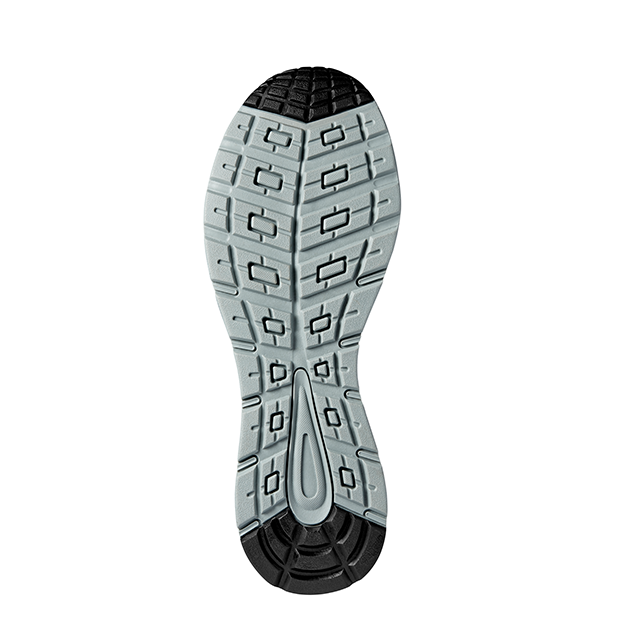
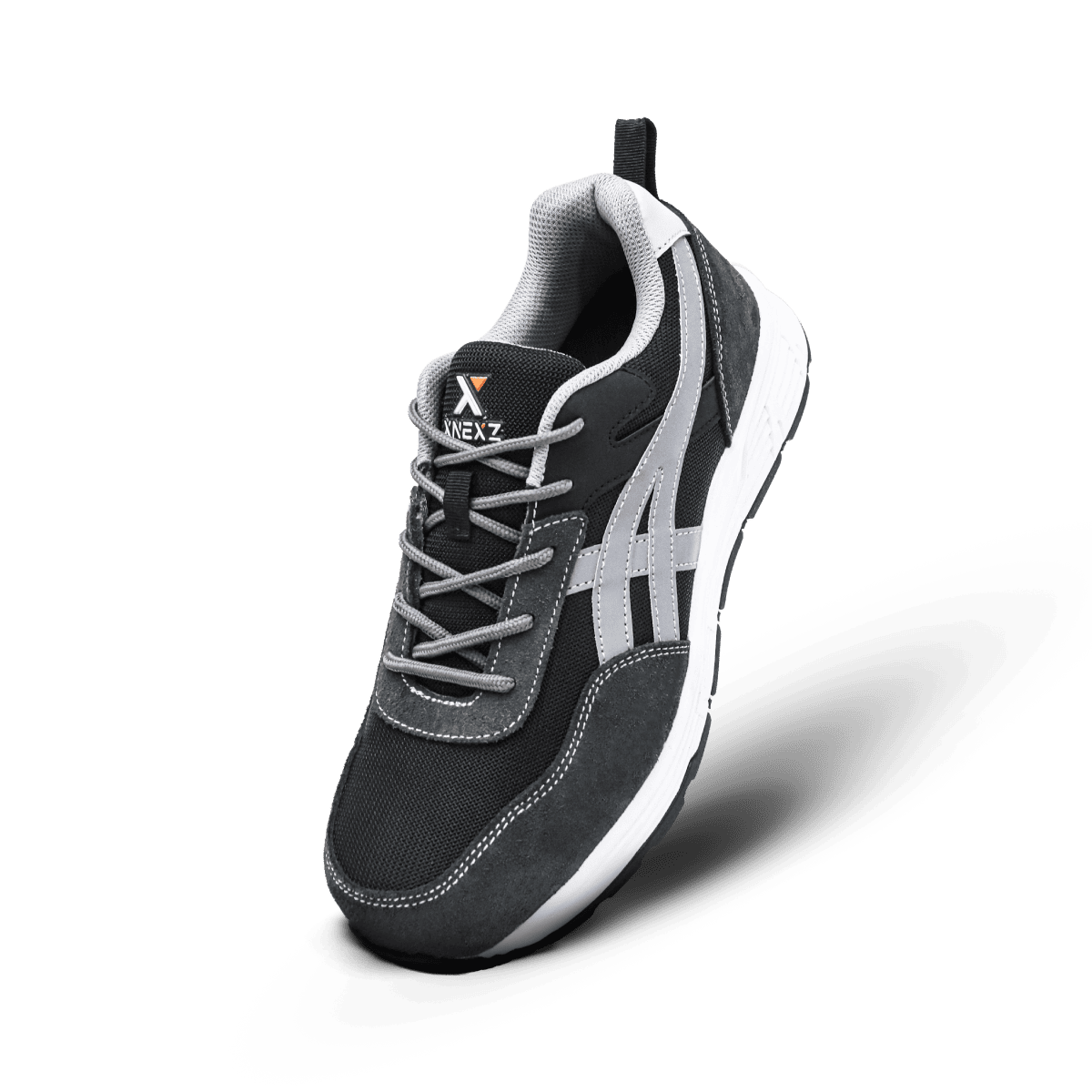
- You want the lowest price on the current standard
- You want the stricter PS (3mm) puncture rating
- You need a size outside UK 6.5–11
- You value an established, award-winning, carbon-neutral brand
- Metal detection isn't a factor in your workplace
- Your site uses metal detectors and you want a metal-conscious build
- You want a non-ferrous aluminium toe and non-metallic Kevlar midsole
- You value a 1-year warranty and 90-day return
- You want free next-day UK delivery included
- Standard antistatic and PL puncture protection suit your role
If your employer's risk assessment mandates a specific toe material, puncture grade or metal-free construction, that requirement decides it regardless of price. Always confirm your site's PPE spec first.
Frequently asked questions
Is the V12 Agile better than the Xnexz StrideX?
On price and puncture rating, the V12 leads, it's cheaper and carries the stricter PS marking, from an established brand. The StrideX counters with a metal-conscious build and longer consumer cover. "Better" depends on whether you need the lowest price and PS puncture protection, or a detector-friendly design and stronger warranty.
Are either of these metal-free?
The StrideX is built to be metal-conscious, an aluminium (non-ferrous) toe and a non-metallic Kevlar midsole. The V12 Agile has a confirmed non-metallic midsole, but its toe material isn't stated and it's not in V12's metal-free range, suggesting a metal toe. For detection gates, the StrideX is the safer choice; confirm the Agile's toe first.
Do they have the same certification?
Both are certified to the current EN ISO 20345:2022+A1:2024 standard, both are antistatic, and both carry FO and SR. The only difference is puncture grade, the V12 is PS (3mm nail), the StrideX is PL (4.5mm nail).
Which is lighter?
They're effectively the same, the V12 is 510g per shoe and the StrideX is roughly 450–550g per shoe. You won't feel a meaningful difference; both are genuinely lightweight trainers.
Are these suitable for outdoor or heavy-duty work?
No, both are light-duty indoor trainers, not outdoor or heavy-industry boots. For wet, abrasive or rugged sites you'd want an S3-rated boot. Always follow your site's PPE requirements.
The verdict
The V12 VT201 Agile is a strong-value shoe, and we won't pretend otherwise, it's cheaper, carries the stricter PS puncture rating, comes in a wider size range, and has the pedigree of an established, award-winning, carbon-neutral UK brand. If price and puncture protection lead your list, it's an easy call.
The Xnexz StrideX competes on a different footing: a metal-conscious build (aluminium toe, non-metallic Kevlar midsole) that suits detector environments, plus consumer terms an individual buyer feels day one, free next-day UK delivery, a 90-day return and a 1-year warranty.
No single winner here, both are certified to the same current standard, and the choice comes down to your workplace. For the lowest price and PS-grade puncture protection, choose the V12. For a detector-friendly design and stronger after-sales cover, the StrideX is built for exactly that, and you've got 90 days to decide on shift.


