


Both are lightweight, metal-free S1P safety trainers, this is a close call. The Skechers Work Malad is ESD certified and uses a fully non-metallic composite toe, backed by an established brand and a wide size range, but it's certified to the older 2011 standard and costs more (~£95–£115). The Xnexz PulseX is cheaper (£79.97), certified to the current 2022+A1:2024 standard, and comes with a 90-day return and 1-year warranty, but it's antistatic only, not ESD, and uses an aluminium (metal) toe. Need ESD? Choose Skechers. Want current certification, lower price, and better returns? Choose Xnexz.
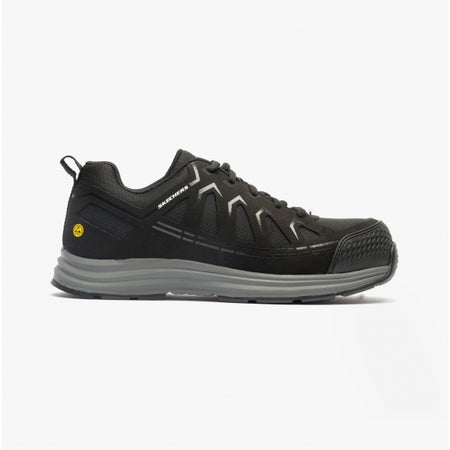
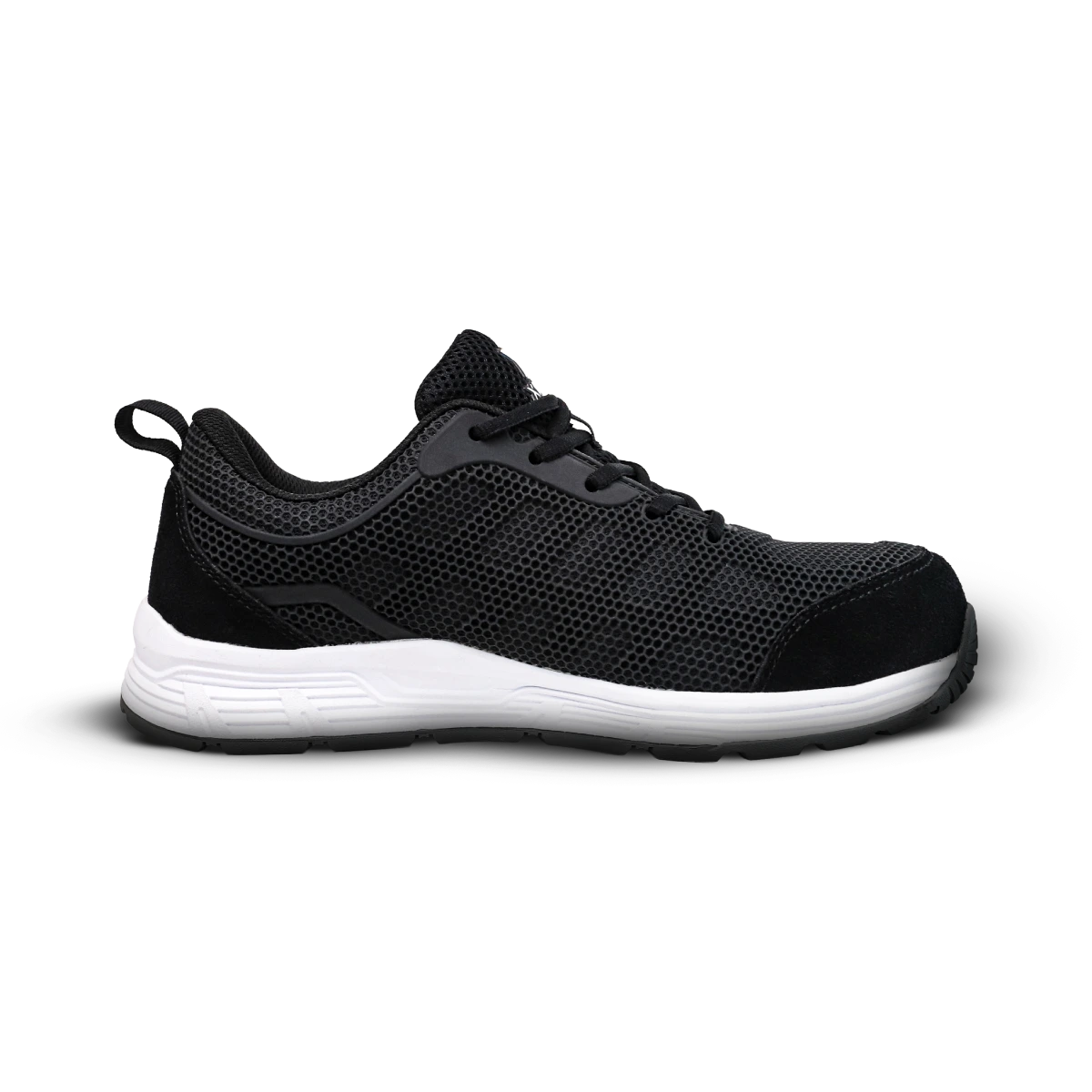
Two lightweight, metal-conscious S1P safety trainers, compared honestly below.
These two shoes compete for the same buyer: someone who wants certified S1P protection in a genuine lightweight trainer, not a heavy steel-toe boot. They're closely matched, and each does some things better than the other. We'll lay out the real differences honestly, including where the Skechers is the stronger shoe, so you can match the right one to your job.
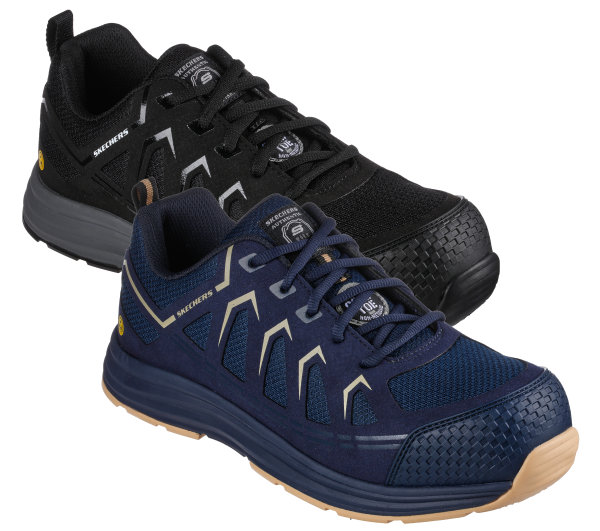
The Skechers Work Malad: What It Is
The Malad is part of the Skechers Work range and is a well-regarded lightweight safety trainer. It's fully metal-free, using a composite toe cap and a non-metallic composite puncture-resistant midsole. Its marking is S1 P SRA ESD, and it's certified to EN ISO 20345:2011.
Its comfort credentials are a genuine strength: it uses Skechers' Air-Cooled Memory Foam insole, a padded collar and tongue, and a mesh-and-synthetic-leather upper for breathability. The rubber outsole carries SRA slip resistance (tested on wet ceramic tile) plus oil resistance, and the shoe is ESD certified for static-sensitive environments. It typically retails around £94.99 on offer, with a regular price near £114.99, and comes in a wide UK 6–13 size range from an established, widely stocked brand.
The Xnexz PulseX: What It Is
The PulseX is a UK-focused S1P safety trainer built around a 200J aluminium toe cap, a lightweight, non-ferrous metal roughly 30% lighter than steel at equivalent protection, and a Kevlar para-aramid puncture-resistant midsole. Its marking is S1PL FO SR, certified to the current EN ISO 20345:2022+A1:2024 standard by CTC (Notified Body 0075).
The upper is breathable mesh and microfibre, the outsole is cushioned PU tuned for smooth indoor floors, and each shoe weighs approximately 450–550g (around 900g per pair). It's priced at £79.97 with free next-day UK delivery, a 90-day return window, and a 1-year damage warranty. Xnexz is a new UK brand launched in 2025, so it doesn't have Skechers' track record or retail reach, what it offers instead is the current certification standard, a lower price, and longer after-sales cover.

Full Specification Comparison
| Factor | Skechers Work Malad | Xnexz PulseX |
|---|---|---|
| Price (typical UK) | ~£94.99 (RRP ~£114.99) | £79.97 |
| Full marking | S1 P SRA ESD | S1PL FO SR |
| Standard revision | EN ISO 20345:2011 | EN ISO 20345:2022+A1:2024 — current |
| Toe cap | Composite — fully non-metallic | Aluminium — light non-ferrous metal, 200J |
| Puncture midsole | Composite non-metallic (P) | Kevlar non-metallic (PL, 4.5mm nail) |
| Static protection | ESD certified — electronics-grade | Antistatic (A) — standard S1P |
| Slip resistance | SRA — wet ceramic tile | SR — 2022 slip test |
| Oil resistance (FO) | Oil-resistant outsole | FO marked |
| Upper | Mesh + synthetic leather | Breathable mesh + microfibre |
| Insole / comfort | Air-Cooled Memory Foam | Cushioned removable insole |
| Outsole | Rubber | Cushioned PU |
| Weight per shoe | Not clearly published | ~450–550g (stated) |
| Metal-free | Yes, fully | Mostly - aluminium (non-ferrous) toe |
| Size range | UK 6–13 | UK 6.5–11 / EU 40–46 |
| Return window | Varies by retailer | 90-day risk-free |
| Warranty | Standard retail warranty | 1-year damage warranty |
| Brand | Established, widely stocked | New UK brand (2025) |
Specs from both brands' official listings and UK retailers, July 2025. Prices and terms vary by retailer, always verify before buying.
Toe Cap: Composite vs Aluminium
Both toe caps meet the same 200J impact requirement, the protection level is identical. The difference is the material and what it means for metal content.
The Skechers uses a composite toe, which is fully non-metallic. The Xnexz uses an aluminium toe, a light, non-ferrous metal. Both are far lighter than steel, but for strictly metal-free environments the composite toe is the cleaner choice. Xnexz's aluminium toe won't trigger detectors tuned only for ferrous metal, but a highly sensitive detector can register aluminium's conductivity. If your site runs strict metal-detection gates, the Skechers composite toe is the safer assumption, and you should verify either shoe against your specific setup. Our guide on aluminium vs composite vs steel toe caps explains how these materials differ in weight, feel, and detection.
Static Protection: ESD vs Antistatic
This is where the Skechers Malad has a clear, genuine edge. It's ESD certified. The Xnexz PulseX is antistatic (the standard 'A' property required for S1P) but not ESD rated.
Standard antistatic footwear dissipates static charge to prevent shocks and reduce ignition risk, every S1P shoe provides this. ESD (electrostatic discharge) certification is a tighter, more tightly controlled standard for environments where even small discharges can damage sensitive electronics: electronics assembly, semiconductor work, some labs and medical settings. If your role requires ESD-rated footwear, the Skechers Malad meets that requirement and the PulseX, as currently certified, does not. In that situation, the Skechers is simply the correct shoe, and we'd rather say so than pretend otherwise.
Certification Standard: Why 2022 vs 2011 Matters
The Skechers Malad is certified to EN ISO 20345:2011. The Xnexz PulseX is certified to EN ISO 20345:2022+A1:2024, the current revision. Both are valid certifications, a shoe certified under the 2011 standard remains legitimately certified and safe to wear. But the 2022 revision is the current one, and it introduced updated requirements, including the newer non-metallic puncture markings (PL and PS) and revised slip-resistance testing.
For most buyers this isn't a dealbreaker either way, both shoes are properly certified S1P footwear. But if you want footwear tested to the latest published standard, the PulseX carries the current revision. If you're unsure what these markings mean, our guide on EN ISO 20345 explained breaks down every code.
Match the shoe to your risk assessment first. If your site specifies ESD footwear or a fully non-metallic toe, the Skechers Malad meets those requirements and the PulseX may not. Certification requirements always override price and preference, confirm your employer's PPE specification before choosing either shoe.
Where the Skechers Malad Is the Stronger Shoe
Genuine advantages, stated plainly
- ESD certification: meets electronics-grade static requirements the PulseX does not currently carry.
- Fully non-metallic composite toe: the cleaner choice for strict metal-detection environments.
- Air-Cooled Memory Foam insole: Skechers' well-regarded cushioning system, a real comfort strength.
- Wider size range: UK 6–13, versus the PulseX's UK 6.5–11.
- Established brand: widely stocked, with years of field history and easy availability.
Where the Xnexz PulseX Makes the Better Case
The PulseX doesn't beat the Malad on ESD or brand history, and we won't pretend it does. Where it competes is on value, standard, and after-sales terms:
- Lower price: £79.97 versus the Malad's typical ~£95–£115, a meaningful saving for equivalent core S1P protection
- Current certification: EN ISO 20345:2022+A1:2024 versus the Malad's 2011 revision
- 90-day return: three months of real-shift testing, which matters most when trying a newer brand
- 1-year damage warranty: longer cover than the standard retail terms most safety trainers carry
- Kevlar midsole: a woven para-aramid insert that flexes with the foot; see how it works in our Kevlar midsole guide
- Published weight: Xnexz states 450–550g per shoe; both are light, but the PulseX gives a specific figure to compare
Price and Value: What You're Paying For
At ~£95–£115, the Malad's price reflects a real, established product: ESD certification, memory-foam comfort, a fully non-metallic build, and the reassurance of a widely stocked brand. If ESD or the composite toe matches your requirements, that price is justified.
At £79.97, the PulseX gives you certified S1P protection with aluminium and Kevlar, the current standard, and better after-sales terms, for £15–£35 less. What you don't get is ESD certification or a long brand track record. So the value question is specific rather than universal: if you need ESD or a fully non-metallic toe, the Malad earns its premium. If your work is general indoor light-duty where standard antistatic and PL puncture protection are enough, the PulseX delivers the core protection for less.
Which Should You Choose?
- Need ESD-rated footwear for electronics or static-sensitive work.
- Require a fully non-metallic (composite) toe for strict metal detection.
- Want Skechers' memory-foam comfort system.
- Need a size outside UK 6.5–11.
- Prefer an established, widely stocked brand.
- Work in general indoor light-duty roles where standard antistatic is sufficient.
- Want to spend less while getting certified S1P protection.
- Prefer footwear certified to the current 2022+A1:2024 standard.
- Value a 90-day return and 1-year warranty to test the shoe properly.
- Want UK-based next-day delivery and returns handling.
If your employer's risk assessment mandates ESD, a fully non-metallic toe, or a specific brand, that requirement decides the matter regardless of price. Always confirm your site's PPE specification before buying either shoe. For a full checklist of what to verify, see our S1P safety trainers buying guide.
Certified S1P Protection. Current Standard. £79.97.
The Verdict
The Skechers Work Malad is a genuinely good shoe. Its ESD certification, fully non-metallic composite toe, memory-foam comfort, wide sizing, and established-brand reassurance make it the right choice for electronics work, strict metal-detection sites, and anyone who wants a proven name. If your job needs any of those things, it earns its ~£95–£115 price.
The Xnexz PulseX is the better-value option for the more common case: general indoor light-duty work where certified S1P protection, standard antistatic dissipation, and PL puncture resistance are what the job actually requires. At £79.97, on the current 2022+A1:2024 standard, with a 90-day return and a 1-year warranty, it delivers the core protection for less, with after-sales terms most established brands don't match.
There's no universal winner here, and we won't invent one. The Skechers wins on ESD and full metal-free construction; the PulseX wins on price, current certification, and returns. Match the shoe to your risk assessment first, then to your budget.
We're a new UK brand, and we'd rather earn your trust than overclaim for it. That's why the PulseX comes with 90 days to try it on your actual shift, and why, when the Skechers is the better fit for your role, we've said so plainly.
If your site accepts S1P certified footwear and doesn't specifically require ESD, try the Xnexz PulseX for 90 days on your real shifts. If it doesn't hold up to what we've said here, send it back. We read every piece of feedback, it's how we build the next pair better.


