


Mechanics and light trade workers face a footwear problem most trades don't: the floor itself is the hazard. Oil, coolant, brake fluid and degreaser turn a clean workshop bay slippery within minutes, and that's before you add dropped tools, sharp offcuts, hours of kneeling, and long shifts on concrete.
This in-depth guide covers the real risks, the one marking most buyers misread, what to prioritise in a shoe, and where an S1P safety trainer genuinely fits, plus where it doesn't.
The short version
For mechanics and light trades, two properties matter above all: certified slip resistance and oil resistance, and they are not the same thing. Oil resistance (FO) means the sole survives contact with petroleum products; slip resistance (SR) is the actual grip test. You want both. Add a 200-joule toe cap for dropped tools, a puncture-resistant midsole for sharp debris, and a flexible sole for kneeling work, and you have the core of a good workshop shoe. Where an employer accepts S1P for indoor, dry, light-duty bay work, a lightweight S1P trainer can be a practical choice. But hot work, welding, heavy plant, wet outdoor yards and live electrical tasks all need different, specifically rated footwear.
Why is the workshop floor such a serious hazard?
This isn't a marketing exaggeration, it's one of the best-documented risks in the trade. The HSE reports that slips and trips cause around 20% of all injuries in the motor vehicle repair industry, and slipping and tripping is the single most common cause of major injury across UK workplaces generally. In a workshop, that risk is amplified by the fluids the job produces.
The HSE's own case studies make the point vividly: a garage foreman fractured his leg after slipping on stairs shortly after walking through a small diesel spillage; a fitter who spilt oil and didn't clear it up later slipped on it himself and fractured his wrist. These aren't unusual incidents, they're the everyday reality of a floor that changes friction as the shift goes on.
Footwear can't fix all of that on its own. Good housekeeping, clearing spills immediately, using drip trays, keeping gangways clear and avoiding trailing leads, does the heavy lifting. But the right shoe is a genuine part of the defence, and the wrong one actively increases risk.
The marking most mechanics misread: oil resistance is not slip resistance

If you take one practical point from this guide, make it this one. It's the most common misunderstanding in workshop footwear, and the HSE flags it directly in its motor vehicle repair guidance, cautioning that "safety footwear" may not mean "non-slip footwear".
"Ensure suitable footwear is worn (caution, 'safety footwear' may not mean 'non-slip footwear')."
The two properties are tested separately and mean completely different things:
| Marking | What it actually means | Why a mechanic needs it |
|---|---|---|
| FO — Oil resistance | The outsole compound resists degrading, swelling or going brittle after contact with fuel and oil | Workshop fluids destroy unsuitable soles; FO protects the shoe's integrity and lifespan |
| SR — Slip resistance | The outsole passed a certified traction test on wet or contaminated flooring | This is the property that actually helps you stay upright on a contaminated bay floor |
Two different tests, two different purposes. An "oil-resistant" sole is not automatically grippy — check for the slip-resistance marking specifically.
In a workshop you genuinely want both: oil resistance so the sole survives the fluids, and certified slip resistance so it grips the floor those fluids create. Buying on one and assuming the other is exactly the mistake the HSE warns about. Our guide to non-slip safety shoes explains how to read the grip ratings properly, and it's worth remembering no shoe grips in every condition, which is why clearing spills still matters.
What should mechanics and light trades look for in a shoe?
Beyond the two markings above, this trade has specific comfort and protection needs shaped by how the work is actually done.
- A flexible sole: mechanics kneel, crouch and crawl constantly. A rigid sole fights that movement, while a sole that bends at the ball of the foot makes crouched work far more comfortable.
- A 200J toe cap: non-negotiable where heavy tools, rotors, wheels and components can fall.
- A puncture-resistant midsole: the "P" in S1P helps protect against swarf, screws and metal offcuts on the shop floor.
- Shock absorption: hours on hard concrete transmit impact into your legs and back; a shock-absorbing heel helps.
- Low weight: lighter feet at hour nine is not a small thing, footwear weight compounds across a shift, part of the hidden cost of heavy safety shoes.
- Breathable materials: workshops run warm, so an upper intended to reduce heat and moisture build-up is genuinely useful over long hours.
- Easy to clean: workshop footwear gets filthy. A material you can wipe down keeps the shoe usable and lets you inspect it properly.
Steel, aluminium or composite toe for workshop work?
All three meet the same 200-joule impact and 15-kilonewton compression requirements, so the protection threshold is identical. What differs is weight, cold transfer and metal content, and for a mechanic doing repetitive, all-day work, weight is the one you feel.
Steel is the traditional, lowest-cost option but the heaviest, and it conducts cold, noticeable in an unheated workshop in winter. Aluminium hits the same rating at roughly 30% less weight and doesn't transfer cold as aggressively. Composite is fully non-metallic and lighter still in some designs, though caps can be slightly bulkier.
For a trade that spends hours kneeling and moving, the lighter options tend to be more comfortable over a full week. Our comparison of aluminium vs composite vs steel toe caps breaks down the trade-offs in detail.
Is S1P the right certification for workshop work?
In plain terms, EN ISO 20345 S1P combines a 200-joule toe cap, antistatic properties, a shock-absorbing heel, an oil-resistant outsole, and a puncture-resistant midsole. For indoor, dry, light-duty workshop work, servicing, diagnostics, light repairs, fitting, general bench and bay work, that mix maps well onto the actual hazards, which is why S1P is so widely worn in light trades.
But S1P has clear boundaries. It is not waterproof, so wash bays and wet outdoor yards may need S3 or WR-rated footwear. It is not heat-rated, so welding, flame-cutting and hot-work areas need footwear specifically rated for heat and molten splash. It does not include metatarsal protection for heavy plant or tyre-bay handling. And critically, antistatic is not electrical insulation, if you work on live parts, including on electric and hybrid vehicles, you need footwear certified to EN 50321-1 for that task, alongside your other insulating PPE and safe systems of work.
Standard antistatic S1P footwear, including XNEXZ, is not electrically insulating and is not suitable for live electrical work. Electric and hybrid vehicle systems carry serious electrical risk, and footwear for that work must be certified to EN 50321-1 and selected for the voltage involved. Always follow your employer's electrical safety procedures and training.
If you're unsure where S1P sits among the classes, our guides to what S1P certification means and the S1 vs S1P vs S2 vs S3 ratings explain what each level covers.
Where XNEXZ fits for mechanics and light trades
XNEXZ is a new UK safety-footwear brand built around a simple idea: people who spend all day on their feet deserve footwear that feels good to wear, looks modern, and still meets certified S1P protection for suitable settings. Both current models, the PulseX and the StrideX, are EN ISO 20345 S1P certified, with an oil-resistant outsole and a slip-considered design aimed at light-duty indoor work.
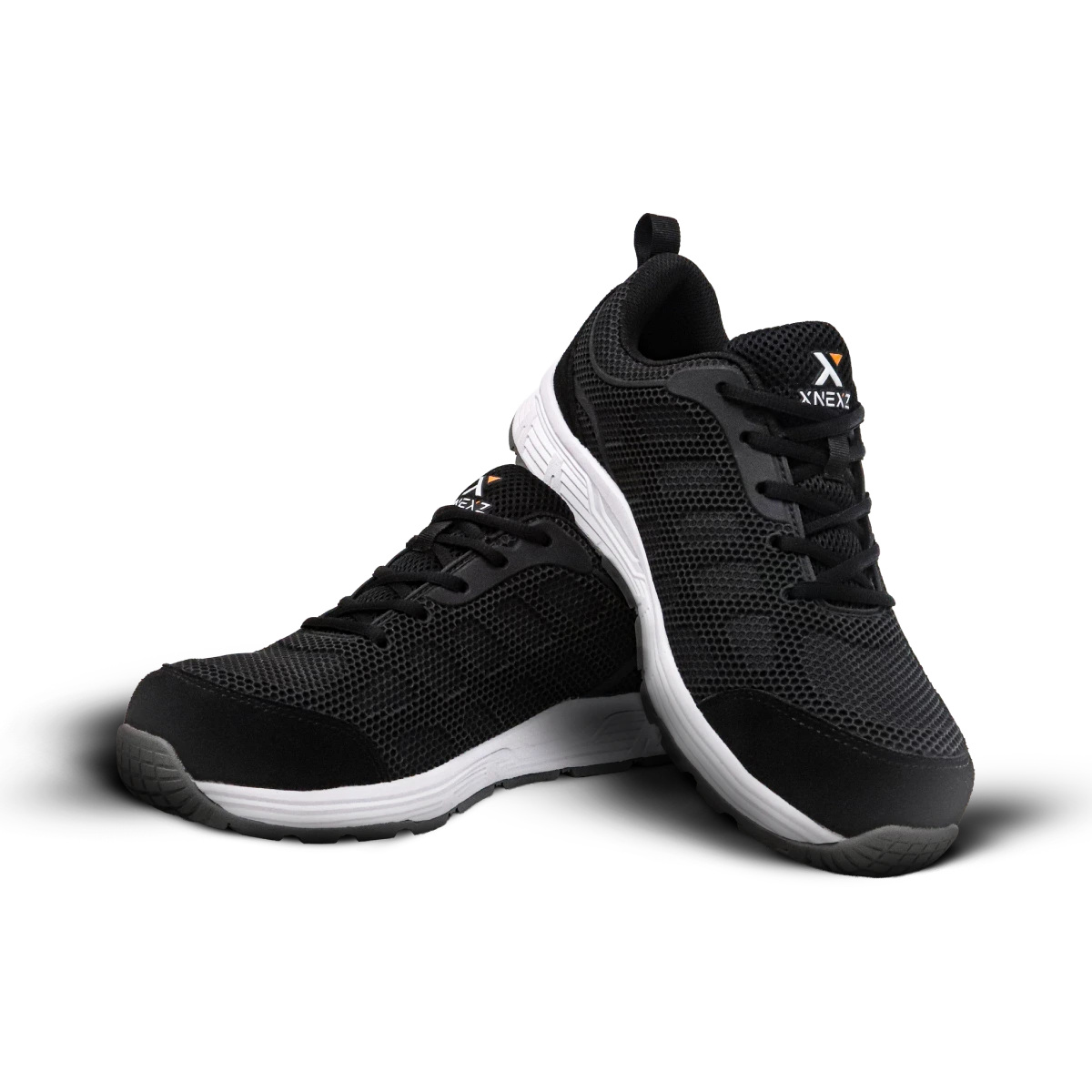
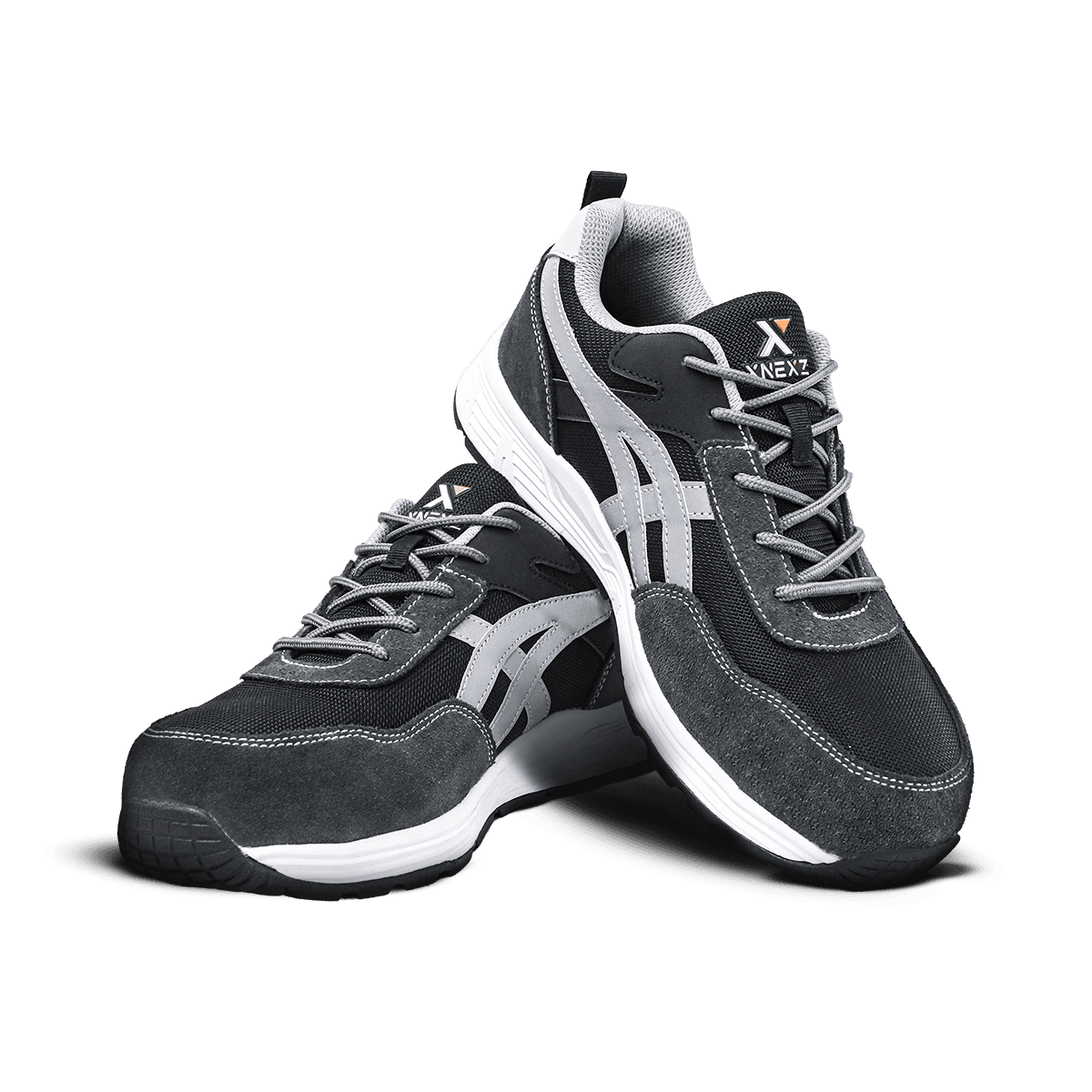
Both share the same core build: a 200J aluminium toe cap, intended to provide certified toe protection while reducing weight compared with a comparable steel component, useful in a trade that spends hours kneeling and moving; a Kevlar puncture-resistant midsole to help protect against swarf, screws and sharp offcuts; a breathable mesh and microfibre upper intended to reduce heat and moisture build-up in a warm workshop; an anti-static design; an oil-resistant outsole; and a shock-absorbing heel for long hours on concrete.
- PulseX pairs that build with a PU outsole, offering cushioning suited to smooth, controlled indoor floors, a reasonable match for bay and bench work. It's the cleaner, sportier-looking option.
- StrideX uses an EVA-and-rubber outsole for varied controlled indoor surfaces, with a more rugged, streetwear-inspired look for those who prefer it.
One honest caveat specific to this trade: a breathable mesh upper is comfortable and light, but it isn't as easy to wipe clean as smooth leather, and it offers less resistance to fluid soaking through than a sealed or water-resistant upper. In a bay where fluids regularly hit your feet, that's a genuine consideration worth weighing before you buy.
What S1P - and XNEXZ - will not do
Honesty is part of how we'd rather sell shoes, so here are the limits stated plainly. Light trade work covers a lot of ground, and a light S1P trainer like the PulseX or StrideX is built for the dry, indoor, light-duty end of it. It is not a heavy-duty, outdoor, waterproof, heat-rated or insulating boot, and we won't pretend otherwise.
- Indoor servicing, diagnostics and light repairs
- Bench, bay and general workshop tasks
- Light fitting, assembly and maintenance trades
- Dry indoor floors with good housekeeping
- Live electrical / EV high-voltage work (needs EN 50321-1)
- Welding, flame-cutting or hot work (needs heat-rated footwear)
- Wash bays and wet outdoor yards (needs S3 / WR)
- Tyre bays and heavy plant handling needing metatarsal guards
If your role sits in the right-hand column, the honest answer is that XNEXZ isn't the right choice - you should wear the protection your employer or safety officer specifies. Mechanics working outdoors, on recovery, or on uneven ground may also prefer a boot for ankle support; our comparison of safety shoes vs safety boots explains when each is the better tool.
Look after them - workshop footwear takes a beating
Safety footwear is PPE, and in a workshop it degrades faster than in almost any other setting. Fluids attack sole compounds, ground-in grit wears the upper, and embedded metal fragments in the tread are a real hazard you can carry from one job to the next.
- Clear the tread regularly - check for embedded swarf, screws and metal fragments, which reduce grip and can create hazards elsewhere.
- Clean off fluids promptly - leaving oil and degreaser on the sole accelerates degradation, even on an FO-rated outsole.
- Inspect for damage - cuts, cracks, separation at the sole bond, and a worn-smooth tread all mean protection is compromised.
- Replace on condition, not calendar - retire footwear after a significant impact, or once the sole is worn smooth or delaminating.
Worn tread is a particular concern in this trade, because grip is doing so much of the work on a contaminated floor. Our guide to safety shoe care and when to replace covers cleaning by material and the signs that mean it's time for a new pair.
Frequently asked questions
Does an oil-resistant sole mean the shoe won't slip?
No - and this is the most important misunderstanding in workshop footwear. Oil resistance (FO) means the sole material survives contact with oil and fuel; slip resistance (SR) is the separate traction test. The HSE specifically cautions that "safety footwear" may not mean "non-slip footwear". Check for the slip-resistance marking specifically.
Are S1P trainers suitable for mechanics?
Often, yes — for indoor, dry, light-duty servicing and repair work where safety footwear is required, S1P is a common and widely accepted level. But hot work, EV high-voltage tasks, wash bays and heavy tyre-bay handling all need different, specifically rated footwear. Your employer's risk assessment decides.
Can I wear antistatic safety shoes for EV and hybrid work?
Not for live electrical tasks. Antistatic footwear dissipates static charge, it is not designed to protect against electric shock. Live working on EV and hybrid systems requires footwear certified to EN 50321-1 for the relevant voltage class, plus your other insulating PPE, training and safe systems of work.
Steel, aluminium or composite toe for workshop work?
All three meet the same 200J impact rating, so protection is equivalent. Steel is cheapest but heaviest and conducts cold; aluminium is around 30% lighter at the same rating; composite is fully non-metallic. For a trade with lots of kneeling and movement, lighter options are usually more comfortable over a full shift.
Mesh or leather uppers for a workshop?
It's a genuine trade-off. Mesh is lighter and more breathable in a warm workshop; leather is easier to wipe clean and resists fluid soaking through better. If fluids regularly hit your feet, weigh that carefully — and follow whatever your employer specifies.
How often should workshop safety shoes be replaced?
Replace on condition, not a fixed date. Retire them after any significant impact, or once the tread is worn smooth, the sole is cracking or separating, the toe cap is damaged, or the upper is torn. In workshops, worn tread is often the first thing to go — and grip is exactly what you can't afford to lose.
The honest verdict
For mechanics and light trade workers, the footwear decision comes down to one thing more than any other: the floor. Get certified slip resistance and oil resistance right, add a 200J toe cap, a puncture-resistant midsole and a flexible sole for kneeling work, and you've covered the risks that actually put people in A&E in this trade.
For the indoor, dry, light-duty portion of workshop work, servicing, diagnostics, light repairs, fitting and bench tasks, where the employer accepts S1P footwear, a lightweight-feeling trainer like the XNEXZ PulseX or StrideX is a genuinely practical option: certified S1P protection, an oil-resistant outsole, a puncture-resistant midsole and a shock-absorbing heel for long hours on concrete. We'd also point out honestly that a mesh upper isn't as wipe-clean or fluid-resistant as leather, which matters in a fluid-heavy bay.
Established brands offer wider ranges, more fits, and specialist S3, heat-rated, metatarsal and insulating options that XNEXZ doesn't make; where your role needs those, and in this trade, plenty do, they're the better and safer choice, and we'd rather tell you than oversell. Work out which parts of your week your footwear needs to cover, choose for the most demanding condition, and keep the tread clean and inspected.
Try XNEXZ on your own shift
If your workplace accepts S1P footwear for your workshop tasks and you'd like a more modern, lightweight-feeling option, try XNEXZ in your real workday, then tell us honestly how the fit, grip, flexibility and durability hold up against workshop fluids and hours on concrete, and what we should improve. We're new, and we're listening. Not sure which model suits your bay? Our S1P safety trainers buying guide can help you decide.


