


Delivery and depot work puts serious, repeated demands on your feet, and not always the demands people expect. A depot worker spends hours on hard concrete near forklifts and dropped parcels; a route driver takes thousands of steps a day, in and out of the cab, across pavements and doorsteps. The right footwear depends on which of those your day actually looks like.
This in-depth guide breaks down the real hazards, what to look for, where an S1P safety trainer fits in, and, just as importantly, where it doesn't.
The short version
Most indoor depot, sortation and loading work happens on dry, hard floors around moving equipment, a setting where an EN ISO 20345 S1P safety trainer is often accepted where safety footwear is required. For that work, and for lighter multi-drop delivery, a lightweight-feeling trainer with a puncture-resistant midsole, a slip-resistant outsole, breathable materials and a shock-absorbing heel can be a practical, comfortable choice across a long shift. But delivery and depot work varies enormously: wet outdoor yards, cold stores, forklift-heavy areas needing metatarsal guards, and heavier handling all call for different, higher-rated footwear. Your employer's risk assessment always decides what's required for your role.
What Makes Delivery and Depot Work so Hard on Your Feet?

Before choosing any shoe, it helps to be clear about what the job actually does to your feet, because delivery and depot work combines several demands that rarely appear together in other roles.
Add moving equipment to that list. Depots run on forklifts, cages, roll-cages and powered pallet trucks, and roll cages in particular are a frequent cause of manual-handling injuries.
Footwear can't remove those risks, safe systems of work, housekeeping and training do the heavy lifting there, but the right shoe is a genuine part of protecting the feet within that wider picture.
Route Driver or Depot Worker? The Footwear Needs are Different
This is the distinction most footwear guides miss, and it matters more than the brand on the box. "Delivery and depot" actually covers two quite different jobs, and the ideal shoe for each isn't the same.
- Thousands of steps a day on hard pavement
- Constant in-and-out of the cab
- Kerbs, steps and uneven doorsteps
- Needs: light weight, heel cushioning, grip, breathability
- Long standing shifts on hard concrete
- Rolling carts, cages and forklifts nearby
- Dropped parcels and underfoot debris
- Needs: toe protection, puncture midsole, durable cushioning, slip resistance
The practical takeaway: a route driver's priority is a light, cushioned, breathable shoe that stays comfortable across thousands of steps, while a depot handler's priority is protection and durable, concrete-grade cushioning that doesn't pack flat by month four. Many people do both across a week, which is why a single well-chosen S1P trainer — light enough for the route, protective enough for the depot — can make sense for mixed delivery roles, provided the employer accepts S1P for the indoor tasks.
What Should Delivery and Depot Workers Look For in a Shoe?

With those demands in mind, a handful of features matter far more than the rest. Here's what to prioritise.
- Low weight: because delivery is high-mileage, a lighter-feeling shoe is designed to reduce the effort of every step, part of the hidden cost of heavy safety shoes over a full shift.
- Certified slip resistance: depot floors, loading docks and wet doorsteps make traction critical. Look specifically for a slip-resistance marking, not just any sole.
- A puncture-resistant midsole: the "P" in S1P helps protect against nails, staples and banding common on depot floors.
- Shock absorption: a shock-absorbing heel helps on hard concrete and at the cab step; the ideal sole is firm enough to absorb impact without feeling unstable.
- Breathable materials: wet feet cause blisters on long shifts, so a breathable upper intended to reduce heat and moisture build-up is genuinely useful.
- A correct-rated toe cap: for dropped-parcel and rolling-load risk, a 200-joule toe cap is the baseline protection.
For depot work specifically, our guide to safety shoes for warehouse workers goes deeper on the indoor, concrete-floor side of the job.
Is S1P the Right Certification for Delivery and Depot Work?
In plain terms, EN ISO 20345 S1P is a common and widely accepted level for dry, indoor logistics work, which is why so much of the depot and sortation workforce wears it. An S1P shoe combines a 200-joule toe cap, antistatic properties, a shock-absorbing heel, an oil-resistant outsole, and a puncture-resistant midsole. That mix maps well onto the indoor depot environment: protection from dropped loads and underfoot debris, with the comfort features long shifts demand.
But "widely accepted" is never the same as "automatically allowed." Whether S1P is right for your role is set by your employer's risk assessment, not by any shoe's marketing. Forklift-heavy areas may require metatarsal protection that standard S1P doesn't include; wet or outdoor yards may require S3 with water resistance; cold stores need cold-rated footwear. If you're unsure where S1P sits, our plain-English guides to what S1P certification means and the S1 vs S1P vs S2 vs S3 ratings explain what each level covers.
Slip Resistance vs Oil Resistance - Don't Confuse The Two
This is one of the most misunderstood points in safety footwear, and it matters enormously for depot work. As the HSE puts it plainly: "oil resistant" has nothing to do with slip resistance. They are two completely different things, tested separately.
- Oil resistance (FO): means the outsole material can survive contact with fuel and oil without degrading. It says nothing about grip.
- Slip resistance (SR): is the actual traction test, how well the outsole grips a wet or contaminated floor.
A depot is full of diesel spills, oily loading areas and wet docks, so both properties matter, but only the slip-resistance marking tells you about grip. When you're buying, don't assume an "oil-resistant" sole is automatically non-slip; check for the slip-resistance rating specifically.
And remember that no shoe is non-slip in every condition, good housekeeping and care still matter.
Our guide to non-slip safety shoes explains how to read the ratings and match them to your floors.
Where XNEXZ Fits for Delivery and Depot Teams
XNEXZ is a new UK safety-footwear brand built around a simple idea: people who spend all day on their feet deserve footwear that feels good to wear, looks modern, and still meets certified S1P protection for suitable settings.
Both current models, the PulseX and the StrideX, are EN ISO 20345 S1P certified and designed for the kind of light-duty, indoor, high-step work that much delivery and depot activity involves.
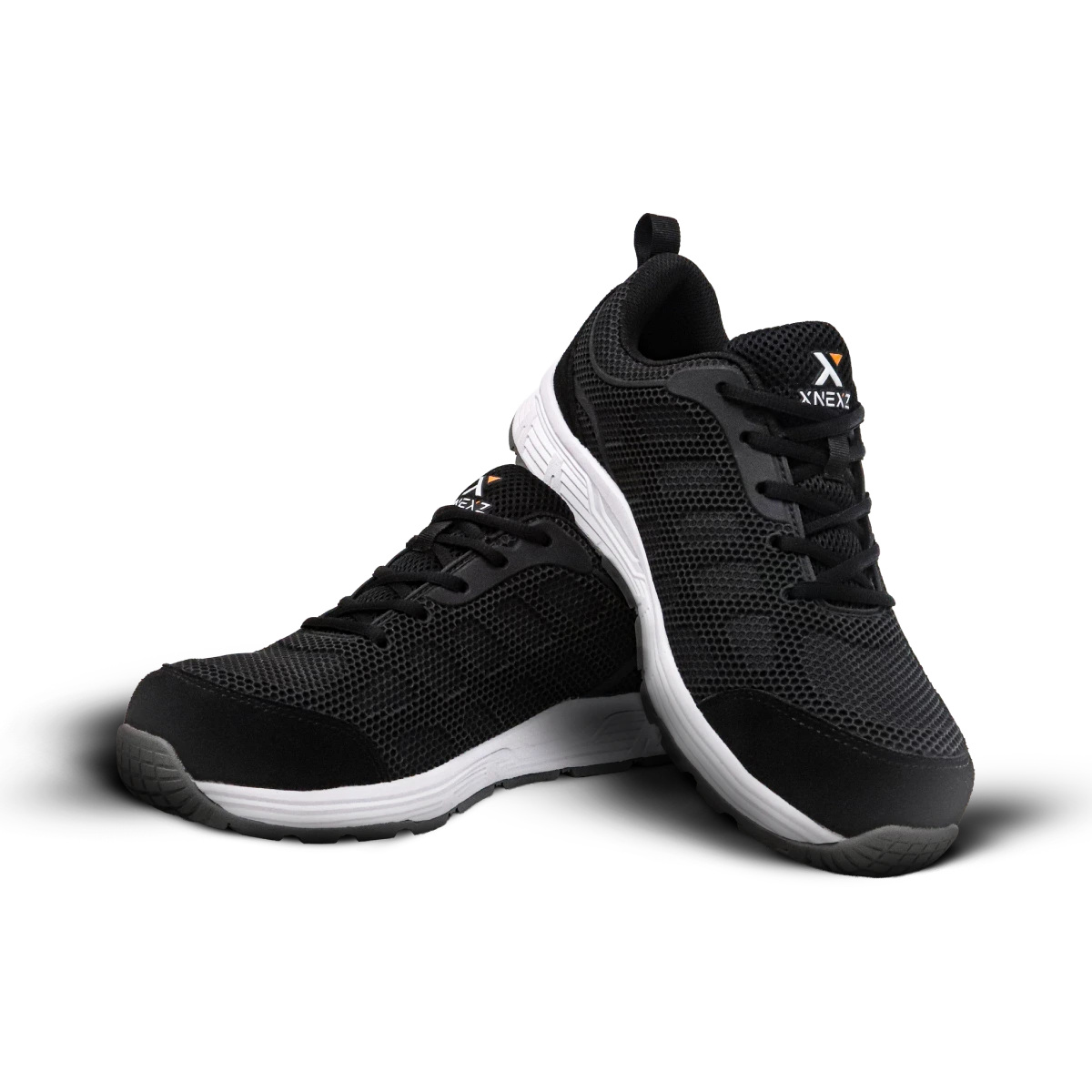
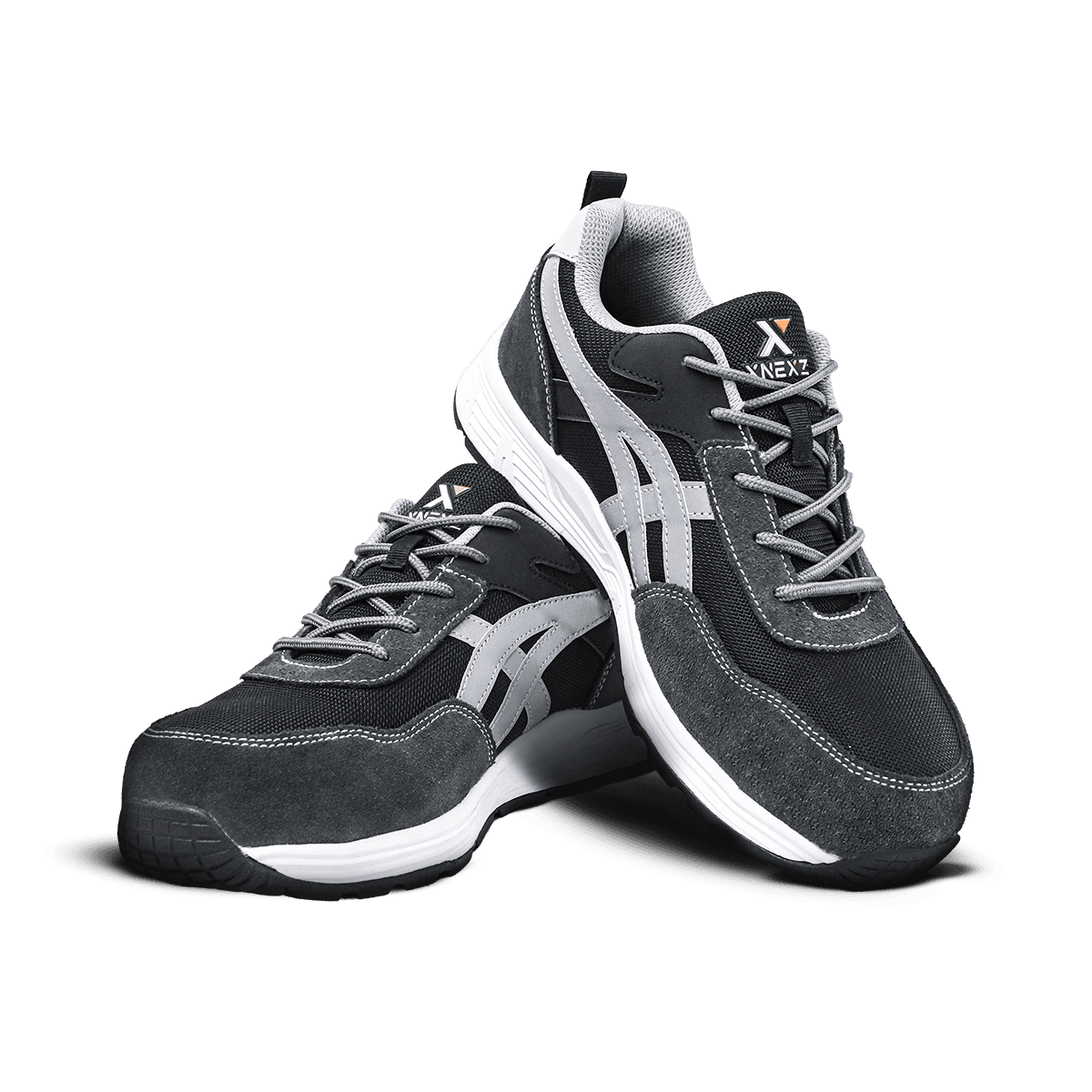
Both share the same core build: a 200J aluminium toe cap, intended to provide certified toe protection while reducing weight compared with a comparable steel component, a real benefit when you're taking thousands of steps and climbing in and out of a cab; a Kevlar puncture-resistant midsole to help protect against sharp debris on depot floors; a breathable mesh and microfibre upper intended to reduce heat and moisture build-up over long shifts; an anti-static design; an oil-resistant outsole; and a shock-absorbing heel for hours on hard concrete.
- PulseX pairs that build with a PU outsole, offering cushioning suited to the smooth, hard floors of depots and sortation centres, a reasonable match for long standing shifts. It's the cleaner, sportier-looking option.
- StrideX uses an EVA-and-rubber outsole for varied controlled surfaces, with a more rugged, streetwear-inspired look for those who prefer it.
The aluminium toe is also non-ferrous, which some workers prefer around metal-detection checks, though it's still a metal, so verify against your specific site. Where a light, breathable, protective S1P trainer suits the job and your employer accepts it, both models are designed to earn their place across a delivery or depot shift.
What S1P - and XNEXZ - Will Not Do
Honesty is part of how we'd rather sell shoes, so here are the limits stated plainly. Delivery and depot work is broad, and a light S1P trainer like the PulseX or StrideX is built for the dry, indoor, light-duty end of it. It is not a heavy-duty, outdoor, waterproof or cold-rated boot, and we won't pretend otherwise.
- Indoor depot, sortation and parcel-hub work
- Loading and unloading on dry indoor floors
- Lighter multi-drop and courier delivery
- Trolley, cage and pallet-truck work indoors
- Wet outdoor yards and docks (needs S3 / water resistance)
- Cold stores and chilled depots (needs cold-rated footwear)
- Forklift-heavy areas needing metatarsal guards
- Heavy handling or anything rated above S1P
If your role sits in the right-hand column, the honest answer is that XNEXZ isn't the right choice - you should wear the protection your employer or safety officer specifies.
Some drivers who work rough outdoor yards or need ankle support may also prefer a boot over any low-cut shoe; there's no shame in choosing the right tool for tougher conditions.
Getting The Fit Right For Long Delivery Shifts
Even the best shoe underperforms if the size is wrong, and this matters more with safety footwear than ordinary trainers. The protective toe cap is rigid and does not stretch or break in, so the fit has to be right from day one - both for comfort across a high-step shift and for the toe protection to sit correctly.
A good rule of thumb: leave roughly a thumb's width - about 10 to 15mm - between your longest toe and the front of the shoe. Measure your feet rather than assuming your usual size, do it later in the day when feet have swelled, and wear the socks you actually work in.
Because delivery means so much walking, a shoe that's slightly too tight will be felt within hours, and one that's too loose will let your foot slide at every step. Our safety trainers size guide walks through measuring and converting sizes step by step.
Frequently Asked Questions
Do delivery drivers need safety shoes?
It depends on the role and the employer. Drivers who enter depots, warehouses or loading areas often need safety footwear because of dropped-load and equipment risks, while some purely on-road roles may not. The employer's risk assessment decides, always check before assuming.
Are S1P trainers suitable for depot and sortation work?
Often, yes, for dry, indoor depot floors with general handling, S1P is a common and widely accepted level where safety footwear is required. But forklift-heavy areas may need metatarsal protection, and wet or cold zones need higher-rated footwear. Confirm with your employer.
Does an oil-resistant sole mean the shoe won't slip?
No, and this is a common and important misunderstanding. Oil resistance (FO) means the sole survives contact with oil and fuel; slip resistance (SR) is the separate test for grip. Always check for the slip-resistance marking specifically if traction matters, which on depot floors it does.
Should delivery drivers choose shoes or boots?
For light, high-step, mostly indoor delivery and depot work, a lightweight shoe is often more comfortable. For rough outdoor yards, wet conditions, or where ankle support is needed, a boot may be the better and safer choice. Match the footwear to your actual conditions and your employer's requirements.
Which XNEXZ model suits delivery and depot work better?
Both share the same S1P protection and core build. The PulseX has a PU outsole and a cleaner, sportier look suited to smooth depot floors; the StrideX has an EVA-and-rubber outsole and a more rugged style. Choose based on your surfaces and the look you prefer.
Can I wear these in a chilled or refrigerated depot?
No, these are S1P trainers for dry, indoor, light-duty work and aren't cold-insulated. Chilled and freezer environments need footwear rated for cold conditions, so follow your employer's specified footwear for those areas.
The Honest Verdict
Delivery and depot work is more varied than a single shoe recommendation can cover, which is exactly why the honest answer starts with your specific role, not a product. For indoor depot, sortation and lighter multi-drop work on dry floors, where the employer accepts S1P footwear, a lightweight-feeling trainer like the XNEXZ PulseX or StrideX is a genuinely practical option: certified S1P protection, a puncture-resistant midsole, a slip-considered outsole, breathable materials, and a shock-absorbing heel built around long, high-step shifts.
Established brands may offer wider ranges, more sizes and fits, and specialist S3, waterproof, cold-rated or metatarsal options that XNEXZ doesn't make; if your role needs those, they're the better and safer choice, and we'd rather tell you so than oversell. What XNEXZ offers is a focused proposition: suitable S1P protection in a lighter-feeling, better-looking shoe from a new UK brand that would rather be honest about where its footwear fits.
Work out whether your day is more route or more depot, check what your employer requires, match the shoe to the more demanding condition you face, and you'll end up with footwear that protects you and keeps you comfortable across the shift.
Try XNEXZ on your own shift
If your workplace accepts S1P footwear and you'd like a more modern, lightweight-feeling option for delivery or depot work, try XNEXZ in your real workday, then tell us honestly how the fit, comfort, grip and durability hold up, and what we should improve. We're new, and we're listening. Not sure which model suits your role? Our S1P safety trainers buying guide can help you decide.


