


A budget steel-toe leather workhorse against a lightweight aluminium-and-Kevlar trainer. The Portwest FW64 Steelite Trekker is one of the best-known entry-level S1P shoes in the UK trade, priced to kit out whole workforces.
The Xnexz PulseX is a lighter, more metal-conscious alternative on the current certification standard.
They're not really the same category of shoe, here's the honest breakdown of what each pound actually buys.
Quick answer
The Portwest FW64 is dramatically cheaper, typically £20–£33, and comes from one of the world's largest workwear brands, with a steel toe cap, a steel midsole, and the top SRC slip rating. It's certified to the older EN ISO 20345:2011 standard. The Xnexz PulseX (£79.97) costs more but is meaningfully lighter, uses a 200J aluminium toe and Kevlar midsole instead of two steel components, is certified to the current 2022 standard, and adds a 90-day return and 1-year warranty. If budget and bulk buying matter most, the FW64 is hard to beat. If weight, metal-detector compatibility and current certification matter more, the PulseX is built for that.
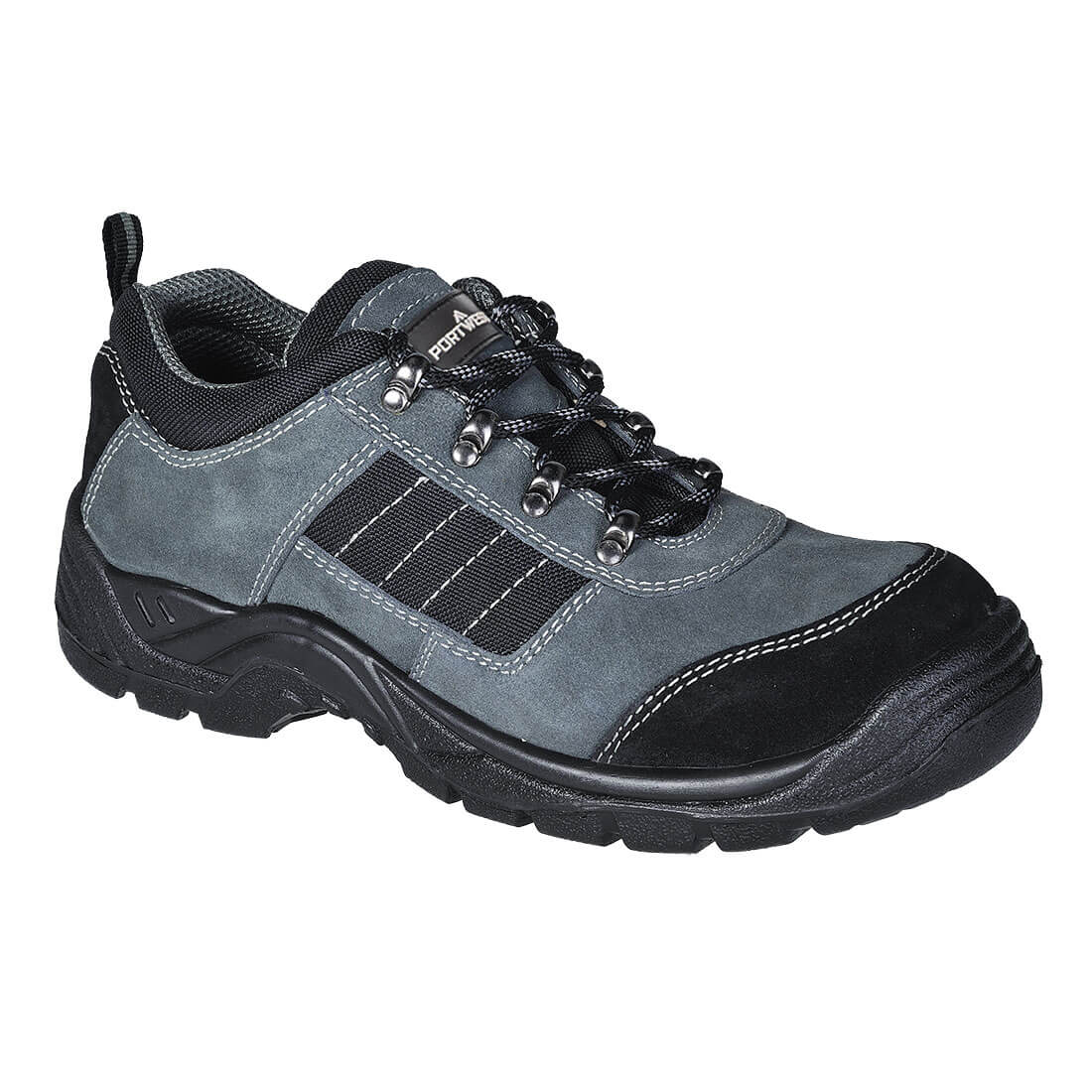
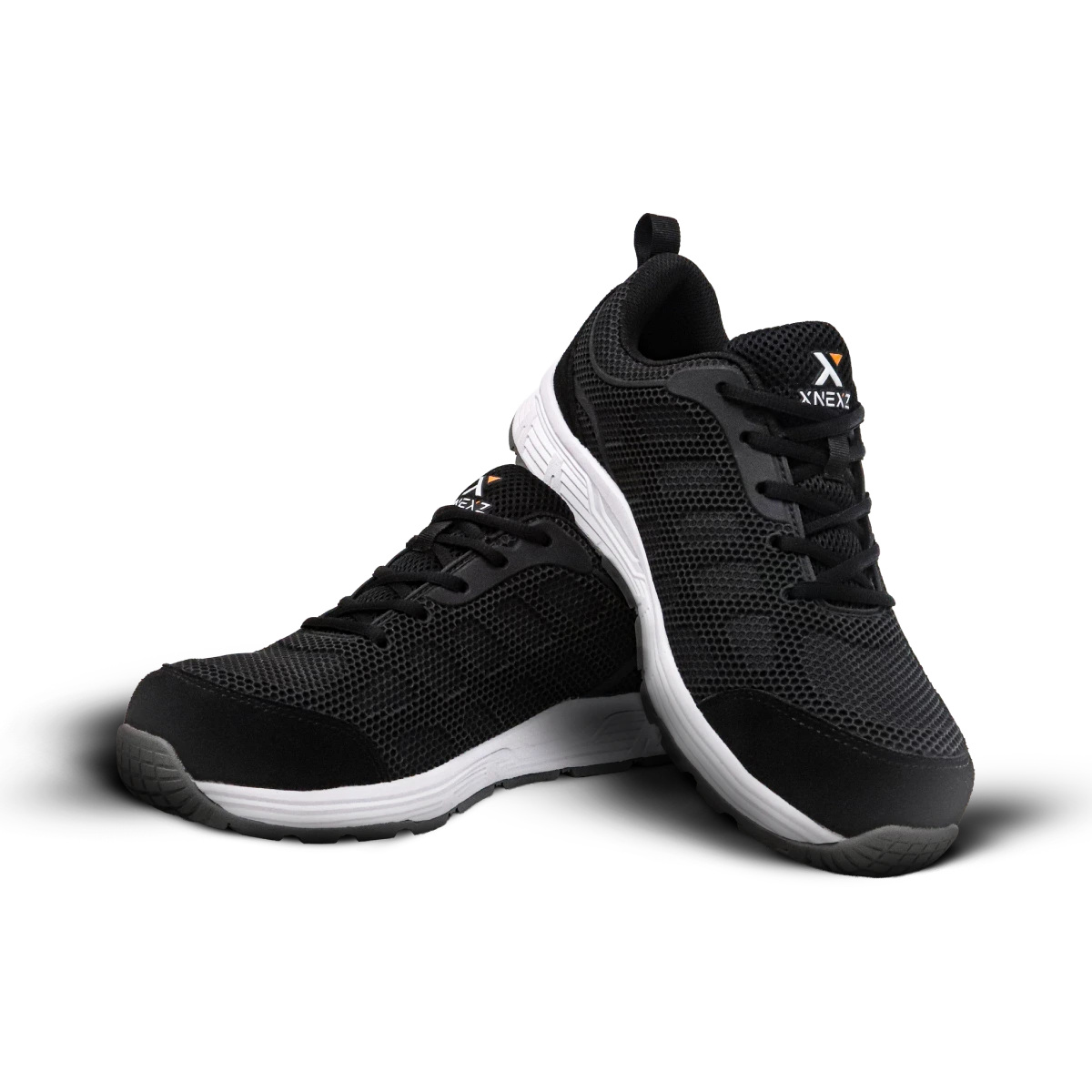
A budget steel-toe leather shoe versus a lightweight aluminium-and-Kevlar trainer — compared honestly below.
What's the real difference between the Portwest FW64 and Xnexz PulseX?
These two shoes aren't really chasing the same buyer, and it's worth saying that upfront. The FW64 is a classic entry-level trade shoe: a cow suede leather upper over a steel toe cap and steel midsole, sold in bulk to trade buyers and employers kitting out large teams at a low unit cost. The PulseX is a lighter, more modern build, an aluminium toe and Kevlar midsole under a breathable mesh upper, sold direct to individual workers on the current certification standard.
Both are genuinely certified S1P footwear that will protect your toes and resist penetration. The differences are in the materials, the standard, the weight, and, most obviously, the price. Here's how the categories fall:
Honest tally: the FW64 wins hard on price, sizing and brand scale; the PulseX wins on materials, weight, standard and consumer terms. This isn't really a fair fight on spec alone — it's a fair fight on value for two very different buyers.
Why is the Portwest FW64 so much cheaper?
This is the honest starting point. UK trade retailers list the FW64 anywhere from around £17 to £33 depending on quantity and supplier, a fraction of the PulseX's £79.97. That gap isn't a discount trick; it reflects a genuinely different manufacturing approach and market position.
- Steel components: steel toe caps and steel midsoles are cheaper to produce than aluminium or Kevlar at scale.
- Trade/bulk pricing: Portwest sells FW64 in volume to employers and distributors, which drives unit price down.
- Simpler construction: a suede leather upper over a steel shell is a well-established, low-cost build.
- Massive scale: Portwest is one of the largest safety footwear manufacturers in the world, with manufacturing efficiencies a new brand can't match yet.
None of that makes the FW64 a lesser shoe for its intended job. It's a legitimate, widely used, properly certified S1P shoe that thousands of UK workers wear every day. It just isn't trying to be a lightweight trainer.
Steel toe and steel midsole vs aluminium toe and Kevlar, what's the real trade-off?
Both toe caps meet the same 200-joule impact requirement, so the protection threshold is identical. The difference is what that protection costs you in weight and metal content.
The FW64 uses a steel toe cap and a steel midsole, two solid metal components stacked in one shoe. Steel is proven, robust and inexpensive, which is a big part of why the FW64 is so keenly priced. Its downsides are weight, cold transfer, and the near-certainty of triggering a metal detector.
The PulseX uses a 200J aluminium toe cap, a non-ferrous metal roughly 30% lighter than steel at the same protection, paired with a Kevlar (para-aramid) midsole that flexes with the foot rather than resisting it like a rigid steel plate. Neither component is fully non-metallic (aluminium is still a metal), but the PulseX carries far less metal overall and is meaningfully lighter across a full shift.
| Component | Portwest FW64 | Xnexz PulseX |
|---|---|---|
| Toe cap | 200J steel | 200J aluminium (~30% lighter) |
| Midsole | Steel plate, rigid | Kevlar, flexes with the foot |
| Metal content | High, two steel parts | Lower, one non-ferrous metal part |
| Metal detectors | Will trigger gates | Detector-friendlier (verify on-site) |
| Underfoot feel | Firm, rigid plate | Flexes at the ball of the foot |
See aluminium toe vs steel toe and Kevlar vs steel midsole for the full material science behind this.
Does the leather upper or the mesh upper suit your job better?
This is a genuine, unforced trade-off rather than a clear win for either shoe.
- Portwest FW64: cow suede leather resists abrasion, scuffs and light wet-site contact better than mesh.
- Padded collar and back pull-tab make it quick to get on and comfortable at the ankle.
- Trade-off: leather is heavier, runs warmer, and needs conditioning to stay supple.
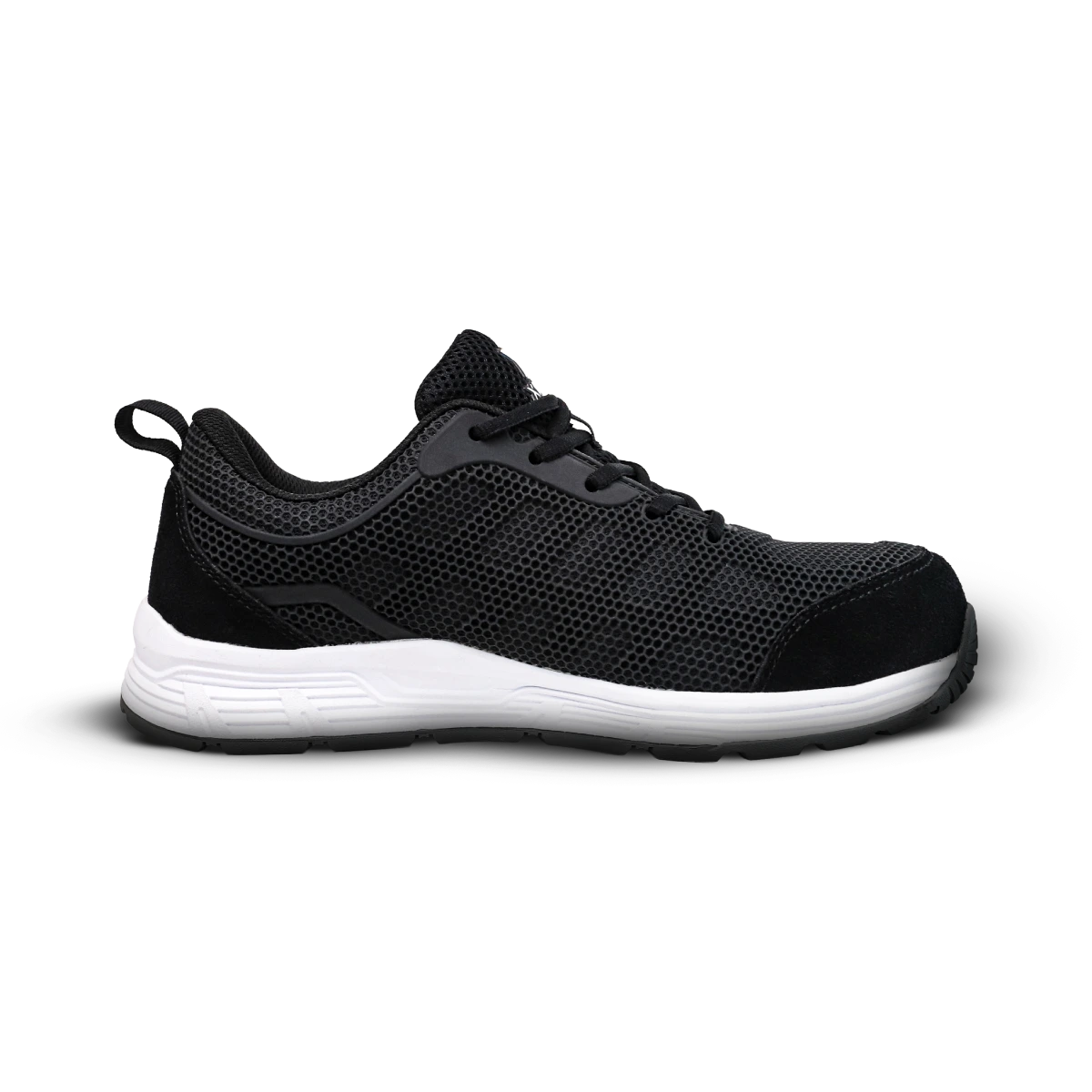
- Xnexz PulseX: mesh and microfibre keep feet cooler and drier over long indoor shifts.
- Lighter overall build feels more like an athletic trainer than a work shoe.
- Trade-off: mesh isn't as abrasion- or weather-resistant outdoors as leather.
It's the classic mesh vs leather upper decision: durability and a traditional feel, or airflow and low weight.
SRC vs SR - which slip rating is stronger?
Here the FW64 has a genuine, stated edge. It carries SRC, meaning it passed slip testing on both wet ceramic tile (SRA) and oily steel (SRB), the most complete slip credential under the older test regime. The PulseX carries SR, the slip marking under the newer 2022 standard, which restructured how slip resistance is classified and tested.
Both are certified for slip resistance, and SRC's dual-surface pass is a real, practical strength if your floors vary between wet and oily. If contaminated-floor grip is a priority in your role, that's worth weighing directly, see our guide to non-slip safety shoes for how to read the codes.
Does the 2011 vs 2022 standard actually matter?
The FW64 is certified to EN ISO 20345:2011; the PulseX to EN ISO 20345:2022+A1:2024. Both are valid, a shoe certified under the 2011 edition remains legitimately certified and safe to wear, and millions of pairs of 2011-standard footwear are in daily use across the UK right now. The 2022 revision is simply the current one, updating areas including the non-metallic puncture markings and slip-resistance classifications.
For most buyers this isn't a dealbreaker either way. But if you specifically want footwear tested to the latest published standard, the PulseX has the edge. For a plain-English decode of every marking on the label, see EN ISO 20345 explained.
How much does the weight difference actually matter day to day?
Two steel components plus a leather upper add real mass compared with an aluminium toe, a Kevlar midsole and a mesh upper. Portwest doesn't publish a clean per-shoe weight figure for the FW64, but steel-toe, steel-midsole leather shoes in this category are consistently among the heavier options in the S1P class, a direct consequence of using two solid metal parts rather than one lighter one.
If your role is high-step and indoors, that difference is felt by mid-shift. Our breakdown of the hidden cost of heavy safety shoes covers how footwear weight translates into real fatigue over a working week.
Which safety shoe should you buy?
- Budget or bulk-buying for a team is the priority
- You want the top SRC slip rating
- You prefer a traditional leather upper
- You need a size outside UK 6.5–11 (FW64 runs UK 3–14)
- A steel toe is accepted on your site (no detector gates)
- You want the lightest shoe you can get in this category
- Your site uses metal detectors
- You want footwear certified to the current 2022 standard
- You value a 90-day return and 1-year warranty
- Breathability matters for a long indoor shift
Still deciding? Our S1P safety trainers buying guide walks through every marking and what to check before you commit, and remember, your employer's risk assessment always has the final say on what's approved for your site.
Frequently asked questions
Is the Portwest FW64 a good shoe for the price?
Yes, for a steel-toe, steel-midsole S1P shoe at roughly £20–£33, it's a well-established, widely used trade product from one of the world's largest safety footwear manufacturers. It isn't trying to compete on weight or metal-free construction; it competes on price and proven reliability.
Why is the Xnexz PulseX so much more expensive than the FW64?
The price gap mainly reflects materials and manufacturing scale, not one shoe being "better" in every sense. Aluminium and Kevlar cost more to produce than steel, and Portwest sells the FW64 in bulk trade volumes that push the unit price down. The PulseX's premium buys lighter materials, the current certification standard, and stronger consumer returns.
Will the FW64 trigger a metal detector?
Very likely, yes, it has both a steel toe cap and a steel midsole. If your site uses metal detection, the PulseX's aluminium toe is a better starting point, though aluminium can still register on very sensitive gates. Always verify any shoe against your specific detector.
Which has better slip resistance?
The FW64 carries SRC, meaning it passed testing on both wet ceramic and oily steel, the most complete slip credential under the older standard. The PulseX carries SR, the slip marking under the newer 2022 standard. Both are certified for slip resistance; SRC simply names the two specific surfaces tested.
Are either of these suitable for heavy outdoor or construction work?
The FW64's steel construction and leather upper make it the more traditional fit for general trade and light construction use, though neither shoe carries an S3 waterproof rating. The PulseX is positioned for indoor, light-duty environments. For wet or heavily abrasive outdoor sites, check whether an S3-rated boot is more appropriate.
The verdict
This isn't really a fair spec-for-spec fight, and pretending otherwise would be dishonest. The Portwest FW64 is a cheap, proven, steel-toe trade shoe from a manufacturing giant, brilliant value if you need to kit out a team on a budget, or you simply want a traditional leather safety shoe and don't mind the extra weight or a steel toe near a detector gate.
The Xnexz PulseX costs more, and it should, aluminium and Kevlar are pricier materials than steel, and that premium buys a genuinely lighter shoe, current 2022 certification, and consumer terms (90-day return, 1-year warranty) that a bulk trade shoe like the FW64 doesn't offer.
If price and proven trade reliability are what you need, the FW64 is a sound, honest choice. If you want the lightest, most metal-conscious shoe on the newest standard, and you're buying for yourself rather than in bulk, the PulseX is built for exactly that.


