


Two UK direct-to-consumer safety footwear brands, both selling straight to workers rather than through trade distributors, which makes this a more even fight than most.
The Black Hammer 9952 is a budget-friendly steel-toe trainer with a huge review base and a distinctive sole guarantee.
The Xnexz PulseX is a lighter, more metal-conscious alternative on the current certification standard. Here's the honest, spec-by-spec breakdown.
Quick answer
The Black Hammer 9952 is the cheaper shoe at £43.95, carries the top SRC slip rating, ships in a wide UK 5–14 size range, and is backed by a large, well-reviewed UK brand with a 240-day sole guarantee. It's built with a steel toe cap and steel midsole, certified to the older EN ISO 20345:2011 standard. The Xnexz PulseX (£79.97) costs more but uses a lighter 200J aluminium toe and Kevlar midsole instead of two steel components, is certified to the current 2022 standard, and backs the purchase with a 90-day return and a 1-year warranty. If price, proven reviews and top-grade slip resistance matter most, the 9952 is hard to beat. If weight, metal-detector compatibility and current certification matter more, the PulseX is built for that.

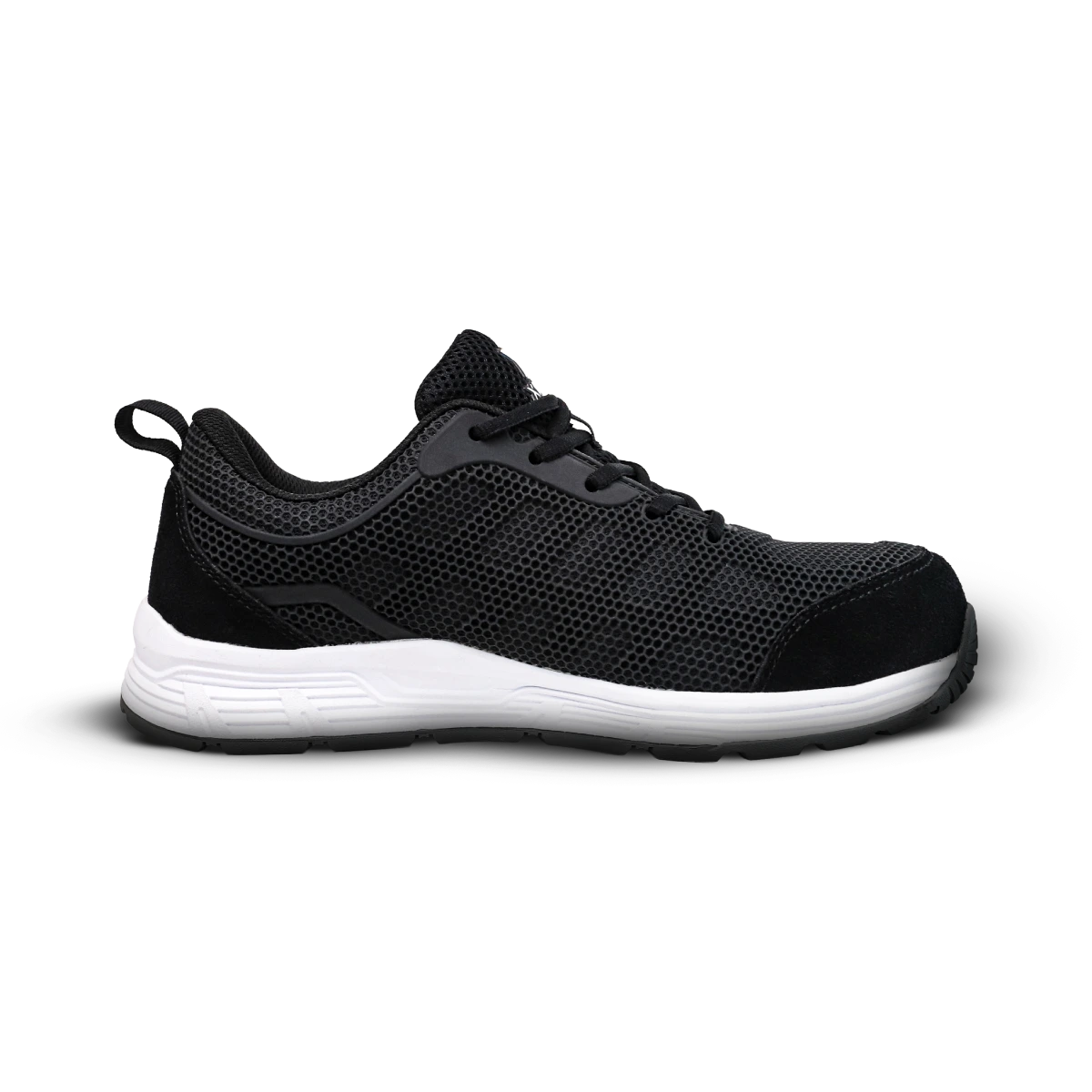
Two UK direct-to-consumer S1P trainers, compared honestly, brand claims checked, nothing overstated.
What's the difference between the Black Hammer 9952 and Xnexz PulseX?
Both are low-cut, work-ready S1P trainers sold direct to UK workers rather than through a trade counter, and both promise protection without a heavy industrial boot. That's a genuinely useful comparison, because unlike some matchups on this blog, you're weighing two brands built the same way, direct sales, UK delivery, customer support you can actually reach.
Where they part ways is materials and standard. The 9952 uses a steel toe cap and a steel midsole under a synthetic upper, certified to the 2011 revision, backed by a large review base and a distinctive 240-day sole guarantee. The PulseX uses an aluminium toe and a Kevlar midsole, certified to the current 2022 revision, backed by a 90-day return and a full 1-year warranty. Here's how the categories fall:
Why is the Black Hammer 9952 so much cheaper?
At £43.95 against the PulseX's £79.97, the price gap is real and worth explaining rather than glossing over. It mostly comes down to two things:
- Steel components: a steel toe cap and steel midsole are cheaper to manufacture at scale than aluminium and Kevlar.
- Established manufacturing scale: Black Hammer has been selling high volumes of budget-friendly safety trainers for years, which brings unit costs down.
That doesn't make the 9952 a lesser shoe for its purpose, it's a properly certified S1P trainer with a large, genuinely engaged customer base. It simply isn't trying to be the lightest or most metal-conscious shoe on the market, and its price reflects that positioning honestly.
Steel toe and midsole vs aluminium and Kevlar, what does it actually change?
Both toe caps meet the same 200-joule impact standard, so the protection level is identical. What differs is the weight and metal content behind that number.
The 9952 uses a steel toe cap and a steel midsole, the shoe's own description cites protection against "1.5 tonnes of compression," which lines up with the standard steel midsole spec. Steel is proven and inexpensive, which is a big part of why the price is so low. Its trade-offs are added weight, cold transfer, and an almost certain trigger on a metal detector.
The PulseX uses a 200J aluminium toe cap, a non-ferrous metal roughly 30% lighter than steel at the same protection level, paired with a Kevlar midsole that flexes with the foot instead of resisting it like a rigid steel plate. It carries less total metal and is meaningfully lighter across a full shift.
| Component | Black Hammer 9952 | Xnexz PulseX |
|---|---|---|
| Toe cap | 200J steel | 200J aluminium (~30% lighter) |
| Midsole | Steel plate, rigid | Kevlar - flexes with the foot |
| Metal content | High, two steel parts | Lower, one non-ferrous part |
| Metal detectors | Will trigger gates | Detector-friendlier (verify on-site) |
| Compression rating | ~1.5 tonnes (15kN) | 15kN standard S1P |
See aluminium toe vs steel toe and Kevlar vs steel midsole for the full material breakdown.
SRC vs SR - is the Black Hammer's slip rating genuinely better?
Here the honest edge goes to the 9952. It's marketed and certified as SRC, meaning it passed slip testing on both wet ceramic tile (SRA) and oily steel (SRB), the most complete slip credential under the older test regime. The PulseX carries SR, the slip marking under the newer 2022 standard, which restructured how slip resistance is classified.
Both shoes are certified for slip resistance, and the 9952's dual-surface SRC pass is a genuine, practical strength if your floors vary between wet and oily conditions. If grip across contaminated surfaces is a priority, that's worth weighing directly, see our guide to non-slip safety shoes for how to read the codes.
Does the 2011 vs 2022 certification actually matter?
The 9952 is certified to EN ISO 20345:2011; the PulseX to EN ISO 20345:2022+A1:2024. Both are valid, a shoe certified under the 2011 edition remains legitimately certified and safe to wear, and it's the standard behind a huge share of safety footwear still sold and worn across the UK today. The 2022 revision is simply the current one, updating areas including the non-metallic puncture markings and slip-resistance classifications.
For most buyers this isn't a dealbreaker. But if you specifically want footwear tested to the latest published standard, the PulseX has the edge. For a plain-English decode of every marking, see EN ISO 20345 explained.
How do the warranties and return policies compare?
Both brands back their shoes further than a standard retail return, but the cover isn't quite the same shape.
Black Hammer's 240-day guarantee is specifically about the sole, if it's defective, worn, or broken within that window, they'll replace it, no questions asked. That's a strong, specific promise on the part of the shoe most likely to fail first.
The PulseX's 1-year warranty covers general damage more broadly, over a longer period, and its 90-day return window (versus Black Hammer's 45-day, unworn-only policy) gives you twice as long to actually trial the shoe on shift before committing.
Both approaches are genuinely useful; they're just built around different priorities.
How much does the review history and brand track record matter?
Black Hammer's product listing cites 1,850+ reviews at 4.5 out of 5 stars, and the brand describes itself as Trustpilot's highest-rated UK safety footwear brand, a claim worth noting as their own published figure rather than independently re-verified here, though it's a genuinely substantial review base for the category. That volume of real-world feedback is valuable: it means thousands of workers have already worn this exact shoe through real shifts.
Xnexz launched in 2025 and doesn't have that history yet. What it offers instead is a longer trial window (90 days) specifically so you can build your own first-hand experience with the shoe before you're relying on someone else's review.
Which safety trainer should you buy?
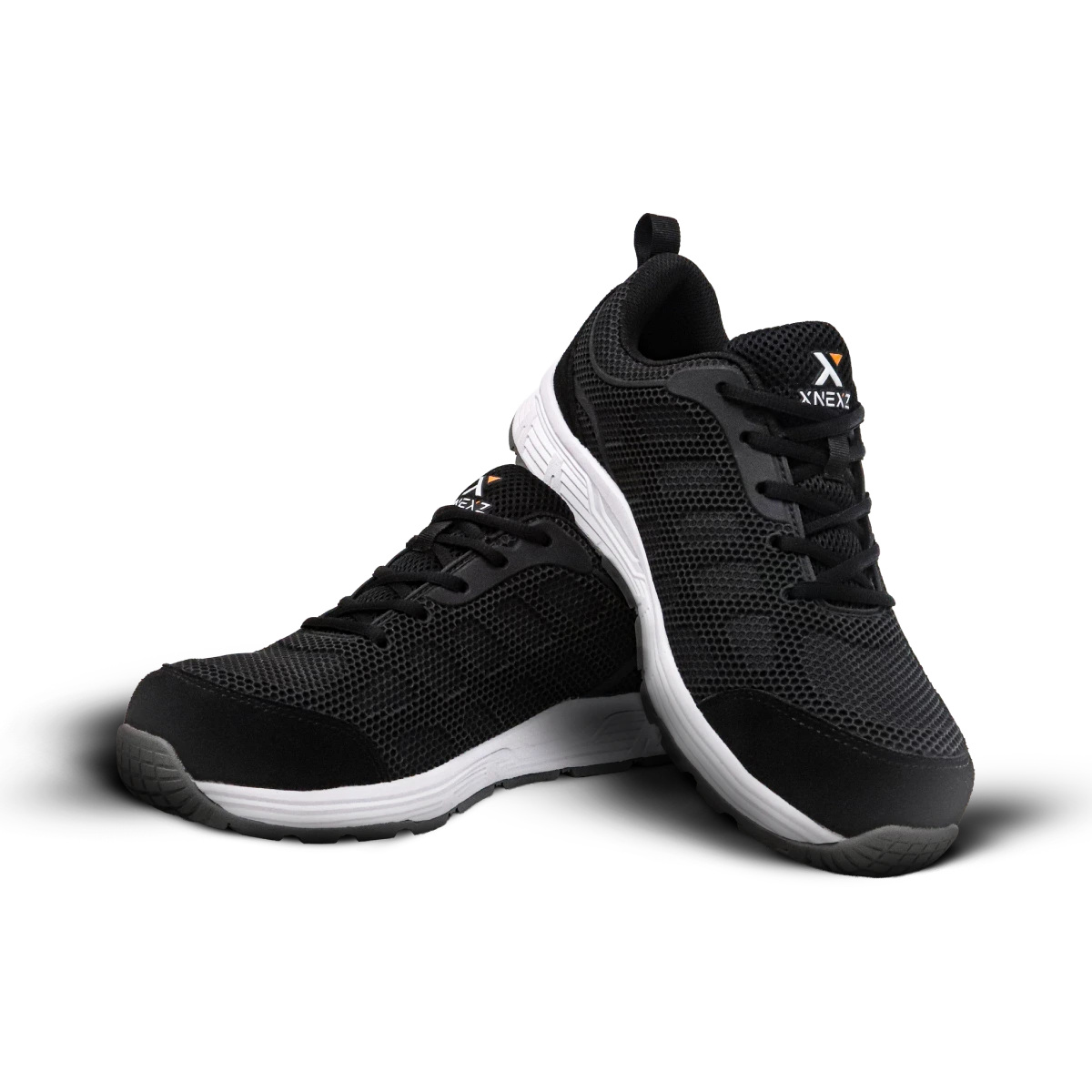
- Price is your priority and you want proven, well-reviewed footwear
- You want the top SRC slip rating for varied floor conditions
- You need a size outside UK 6.5–11 (9952 runs UK 5–14)
- A steel toe is accepted on your site (no detector gates)
- You value a large, established UK direct-to-consumer brand
- You want the lightest shoe available in this category
- Your site uses metal detectors
- You want footwear certified to the current 2022 standard
- You value a longer 90-day trial window and 1-year warranty
- You're comparing based on your own trial, not just past reviews
Still deciding? Our S1P safety trainers buying guide walks through every marking and what to check before you commit, and your employer's risk assessment always has the final say on what's approved for your site.
Frequently asked questions
Is the Black Hammer 9952 a good shoe for the price?
Yes, at £43.95 with a steel toe, steel midsole, SRC slip rating and a large, well-reviewed customer base, it's a strong-value S1P trainer for general work where a steel toe and the older 2011 standard aren't an issue.
Why does the Xnexz PulseX cost almost double the 9952?
Mainly materials and positioning, not one shoe being objectively "better." Aluminium and Kevlar cost more to produce than steel, and the PulseX is certified to the current 2022 standard with a longer, broader warranty and return window. Black Hammer's price reflects steel components and years of manufacturing scale.
Will the 9952 trigger a metal detector?
Very likely, yes, it has a steel toe cap and a steel midsole. If your site uses metal detection, the PulseX's aluminium toe is a better starting point, though very sensitive gates can still register aluminium. Verify any shoe against your specific detector.
Which has the better slip rating?
The 9952 carries SRC, meaning it passed testing on both wet ceramic and oily steel, the most complete slip credential under the older standard. The PulseX carries SR, the marking under the newer 2022 standard. Both are certified for slip resistance; SRC simply names the two specific surfaces tested.
Which has the better warranty?
It depends what you're weighing. Black Hammer's 240-day sole guarantee is a strong, specific, no-questions-asked promise on the part most likely to wear out. The PulseX's 1-year warranty is broader (general damage, not just soles) and its 90-day return window is twice Black Hammer's 45 days.
The verdict
The Black Hammer 9952 is a genuinely strong-value shoe from an established, well-reviewed UK direct-to-consumer brand, cheaper, SRC-rated, wide-sized, and backed by a distinctive sole guarantee. If budget and proven track record are what you need, and a steel toe near a detector gate isn't a concern, it's an easy, defensible choice.
The Xnexz PulseX costs more, and that premium buys a genuinely lighter shoe, current 2022 certification, a broader 1-year warranty, and twice the return window to build your own first-hand trial rather than relying on someone else's reviews.
Neither shoe is the wrong choice, they're built around different priorities. Weigh your floor conditions, your metal-detector requirements, and whether price or the newest standard matters more, and you'll land on the right one either way.


