


Hospitality is, by the numbers, one of the most injury-prone sectors in the UK, and the floor is the main reason why. Wet, greasy kitchen floors, hot liquid spills, dropped knives, and shifts that run ten hours without much sitting down all put real demands on footwear.
This in-depth guide covers the actual hazards, what genuinely matters in a hospitality shoe, and, honestly, which parts of this trade a lightweight S1P trainer suits, and which parts it doesn't.
The short version
For kitchen and hospitality staff, certified slip resistance is the single most important footwear property, around 90% of slips happen on floors wet with water or contaminated with food product. Beyond grip, you want a fully closed toe, a wipe-clean upper for hygiene, and cushioning for long standing shifts. One honest caution: on the hot kitchen line, a breathable mesh upper is not the ideal choice, because porous fabrics offer little protection if hot liquid is spilled on the foot. That means a lightweight mesh S1P trainer like XNEXZ suits front-of-house, bar, hotel and dry service areas far better than it suits a busy hot line. Your employer's policy decides what's required.
Why is hospitality such a high-risk sector for feet?
This isn't marketing framing, it's what the data shows. Accommodation and food services recorded the highest rate of non-fatal workplace injuries of any UK industry sector in 2024/25, exceeding even construction.
Slips, trips and falls sit at the top of the list, and in the food and drink industries specifically, slips and trips make up around 35% of all 'major' injuries, the kind that break bones or require hospital treatment.
That last figure matters most. The HSE is clear that slip injuries are not simply bad luck, years of evidence show slip prevention can be managed effectively and cut injuries by half or more. Footwear is one part of that system, alongside floor surface, cleaning regimes, spill response and good housekeeping.
No shoe substitutes for mopping a spill promptly, but the wrong shoe actively increases your risk.
What hazards does hospitality footwear actually face?
The single most important property: certified slip resistance
If you buy on one specification alone, make it grip. In a kitchen, the floor is the hazard, and slip resistance is the property that directly addresses it.
But there's a widespread misunderstanding worth clearing up. The HSE cautions in its workplace guidance that "safety footwear" may not mean "non-slip footwear" these are separate properties, tested separately. A shoe can carry a toe cap and still have mediocre grip, and a sole marked as oil-resistant is not automatically slip-resistant either.
| Marking | What it actually means | Why hospitality needs it |
|---|---|---|
| SR - slip resistance | The outsole passed a certified traction test on wet or contaminated flooring | The property that actually helps you stay upright on a wet kitchen floor |
| FO - oil resistance | The sole compound resists degrading or swelling after contact with oil | Protects the shoe's integrity in a greasy kitchen — but says nothing about grip |
| 200J toe cap | Certified impact protection at the toe | Useful where heavy pots, trays or equipment are handled |
| SRC (older standard) | Passed both ceramic-tile and oily-steel slip tests | Historically the most complete slip credential; look for slip marking on 2022-standard shoes |
Two of these look similar and are frequently confused. Check for the slip-resistance marking specifically, our guide to non-slip safety shoes explains how to read the ratings.
The honest warning about mesh uppers in kitchens

This is the part of the guide that matters most, and it's a point a lot of footwear marketing skips.
Guidance for restaurant safety is explicit about porous fabric uppers in cooking areas. Workers are advised to avoid porous fabrics such as canvas, because they don't provide enough protection, hot liquid spilled onto porous fabric can soak through and burn the foot underneath.
The recommendation for cooking areas is closed-toe, slip-resistant footwear with a water-resistant or wipe-clean upper.
"Avoid porous fabrics such as canvas. They do not provide enough protection. Hot liquids, if spilled on canvas, would easily burn through the canvas and burn your feet."
Breathable mesh, the material that makes a lightweight safety trainer cool and comfortable, is a porous fabric. That's a genuine trade-off, and it's one we'd rather state plainly than let anyone discover the hard way on a hot line. In practical terms:
- For the hot kitchen line: where boiling liquids, hot oil and stock are handled, a wipe-clean, water-resistant or leather-style upper offers better protection than mesh.
- For front-of-house, bar and hotel work: where the main risks are slips, long standing hours and dropped items rather than hot liquid on the foot, a breathable trainer is far better suited.
- Hygiene matters too: a wipe-clean upper is easier to keep sanitary in a food environment than a fabric one that absorbs spills.
What else should hospitality staff look for?

- A fully closed toe and heel: open-toe shoes and clogs without a closed back are unsuitable anywhere near a kitchen, dropped knives and hot spills make this non-negotiable.
- Cushioning and shock absorption: ten-hour shifts on hard tiles demand genuine underfoot comfort, not just a thin sole.
- Secure fastening: laces tied properly, or a secure slip-on fit, a shoe that slides on the foot is a hazard when you're moving fast.
- Lightweight construction: hospitality is high-step work, so weight compounds across a shift, part of the hidden cost of heavy safety shoes.
- Easy to clean: both for hygiene and because the sole tread needs to stay clear to keep gripping.
- A presentable look: front-of-house staff are customer-facing, so a smart, trainer-like shoe fits the setting better than an industrial boot.
Do hospitality staff need certified safety shoes at all?
It depends on the role, and it's worth being straight about that. Many hospitality roles don't legally require a toe cap, a waiter on a carpeted dining floor may simply need closed-toe, slip-resistant shoes. But kitchen staff handling heavy pots, stockroom and cellar work, and anyone taking in deliveries often do need certified safety footwear, and many employers specify it.
Where safety footwear is required, S1P is a common level for indoor, dry, light-duty work: a 200-joule toe cap, antistatic properties, a shock-absorbing heel, an oil-resistant outsole, and a puncture-resistant midsole. Whether that's right for your role is set by your employer's risk assessment. If you're unsure what the classes cover, see our guides to what S1P certification means and the S1 vs S1P vs S2 vs S3 ratings.
Where XNEXZ fits for hospitality - and where it doesn't
XNEXZ is a new UK safety-footwear brand built around a simple idea: people who spend all day on their feet deserve footwear that feels good to wear, looks modern, and still meets certified S1P protection for suitable settings. Both current models, the PulseX and the StrideX, are EN ISO 20345 S1P certified with an oil-resistant outsole, a shock-absorbing heel and a breathable mesh and microfibre upper.
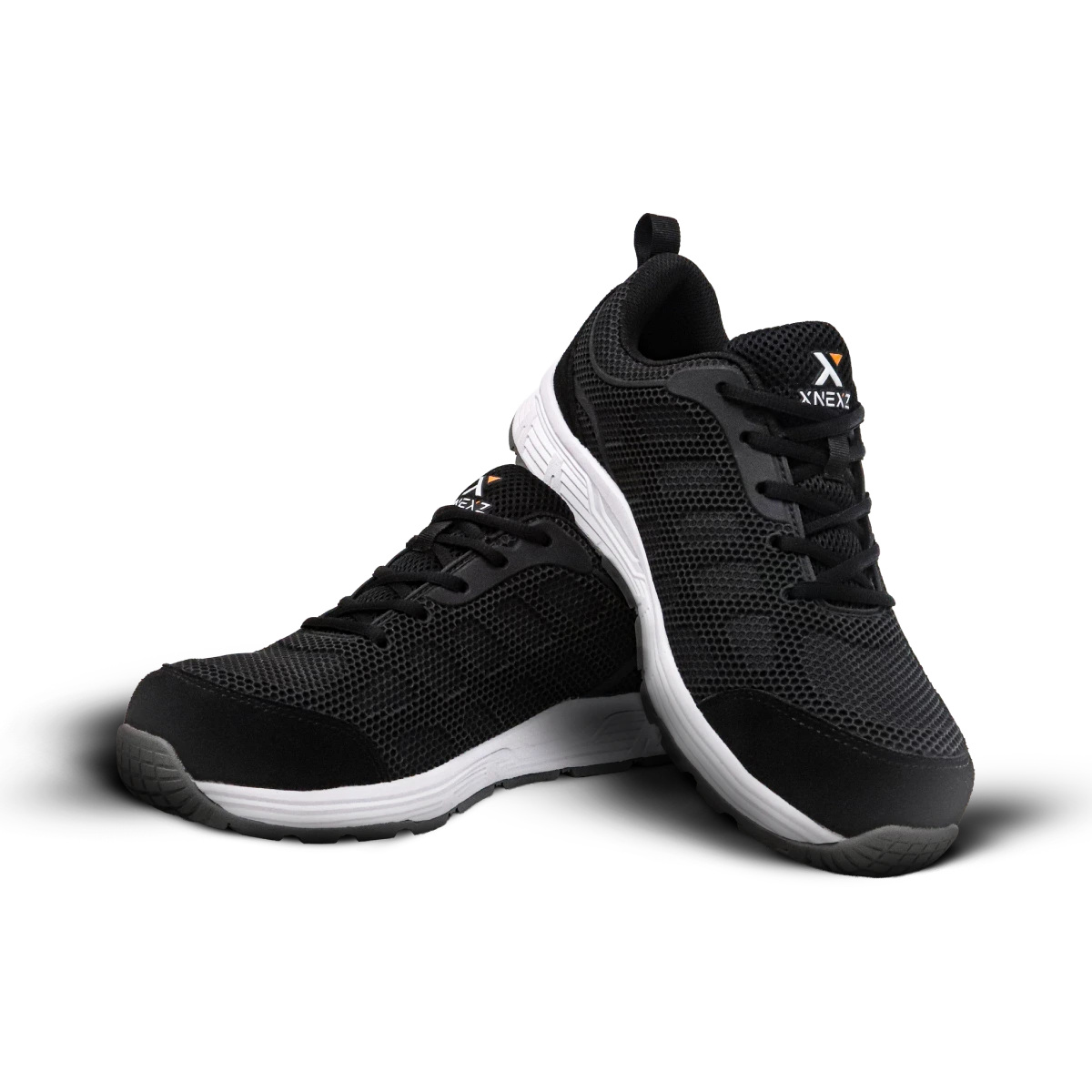
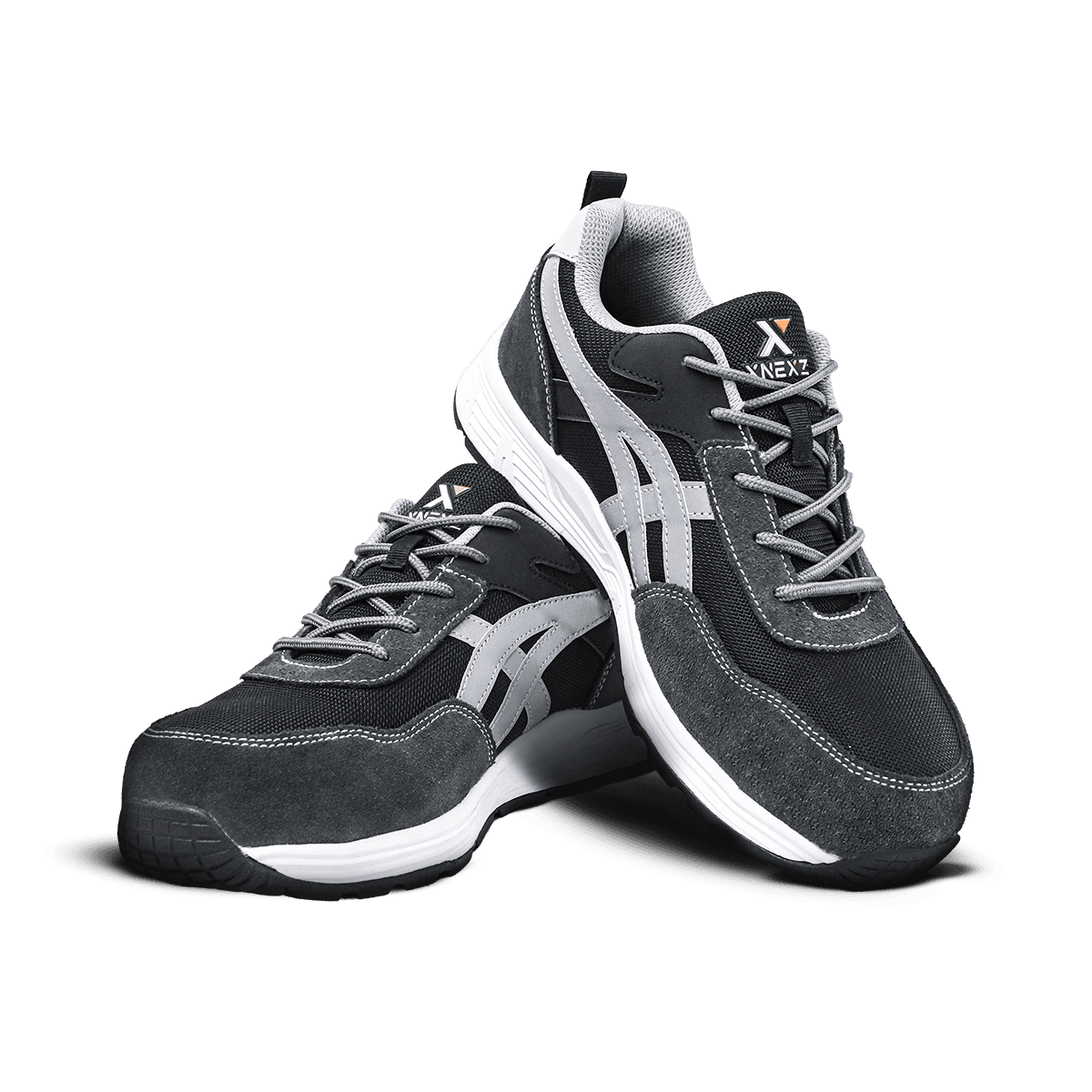
Two S1P trainers suited to dry, front-of-house and service-area hospitality work rather than the hot kitchen line.
Both share the same core build: a 200J aluminium toe cap, intended to provide certified toe protection while reducing weight compared with a comparable steel component; a Kevlar puncture-resistant midsole; a breathable mesh and microfibre upper intended to reduce heat build-up over long shifts; an anti-static design; an oil-resistant outsole; and a shock-absorbing heel for hours on hard floors.
XNEXZ uses a breathable mesh upper, which is a porous fabric — so it is not the right choice for the hot kitchen line, where boiling liquids and hot oil can be spilled onto the foot. For that work, choose footwear with a wipe-clean, water-resistant upper designed for kitchen use. XNEXZ suits the drier, front-of-house and service side of hospitality far better, and we'd rather say so than sell you the wrong shoe.
Where XNEXZ does fit well is the substantial part of hospitality that isn't the hot line: front-of-house and waiting staff on dry floors, bar and café work away from fryers, hotel reception, housekeeping and portering, and back-of-house stockroom and delivery handling. In those roles the priorities are grip, comfort over long shifts, a smart appearance and light weight - which is exactly what these shoes are designed around.
- PulseX pairs that build with a PU outsole and a cleaner, smarter look - a reasonable fit for customer-facing hospitality roles.
- StrideX uses an EVA-and-rubber outsole with a more rugged, streetwear-inspired style for those who prefer it.
What S1P - and XNEXZ - will not do
- Front-of-house and waiting staff on dry floors
- Bar, café and counter service away from fryers
- Hotel reception, housekeeping and portering
- Stockroom, cellar and delivery handling indoors
- Hot kitchen lines with hot liquid spill risk (needs wipe-clean/water-resistant upper)
- Wash-up areas and persistently wet floors (needs S3 / WR)
- Walk-in freezers and cold stores (needs cold-rated footwear)
- Any role your risk assessment rates above S1P
If your role sits in the right-hand column, the honest answer is that XNEXZ isn't the right choice, wear what your employer or head chef specifies for that environment. Plenty of established brands make dedicated kitchen footwear with sealed, wipe-clean uppers and strong slip ratings, and for hot-line work those are the better and safer option. We'd rather point you to them than oversell a mesh trainer into a kitchen.
Look after them - grip is what you can't afford to lose
In hospitality, worn tread is a direct safety issue, because grip is doing most of the protective work. Kitchen footwear also picks up grease and food debris that reduce traction if left in the tread.
- Clear the tread regularly: grease and food debris packed into the grooves reduce grip significantly.
- Wipe down after each shift: for hygiene, and so you can actually inspect the shoe's condition.
- Check the sole for wear: once the tread is worn smooth, slip resistance is compromised regardless of the original rating.
- Replace on condition, not calendar: retire footwear once the sole is smooth or separating, or after significant damage.
Our guide to safety shoe care and when to replace covers cleaning by material and the signs that mean it's time for a new pair.
Frequently asked questions
What's the most important feature in kitchen footwear?
Certified slip resistance, without question. Around 90% of slips occur on floors wet with water or contaminated with food product, and slips and trips make up roughly 35% of major injuries in the food and drink industries. Grip addresses the hazard most likely to injure you.
Are mesh safety trainers suitable for kitchen work?
Not for the hot line. Mesh is a porous fabric, and safety guidance specifically warns that hot liquid spilled onto porous fabric can soak through and burn the foot. For cooking areas, choose a wipe-clean or water-resistant upper. Mesh trainers are better suited to front-of-house and dry service areas.
Do waiters and bar staff need safety shoes?
It depends on the employer's risk assessment. Many front-of-house roles need only closed-toe, slip-resistant shoes rather than a certified toe cap. Kitchen, cellar and delivery-handling roles more often require certified safety footwear. Check your workplace policy.
Does an oil-resistant sole mean it won't slip?
No, they're separate properties. Oil resistance (FO) means the sole survives contact with oil; slip resistance is the actual traction test. The HSE cautions that "safety footwear" may not mean "non-slip footwear", so check for the slip-resistance marking specifically.
Are clogs suitable for kitchen work?
Only closed-toe, closed-heel styles with a certified slip-resistant sole. Open-backed or open-toe styles offer no protection against dropped knives or hot spills, and a shoe that slides on the foot is a hazard in a fast-moving kitchen.
How often should hospitality footwear be replaced?
Replace on condition. Once the tread is worn smooth, slip resistance is compromised, and in a kitchen that's the property you most depend on. Also retire footwear after significant damage or if the sole is cracking or separating.
The Honest Verdict
Hospitality has the highest non-fatal injury rate of any UK sector, and the floor is the reason. Get certified slip resistance right first, add a fully closed toe, cushioning for long shifts and an upper you can keep clean, and you've addressed the risks that actually put hospitality workers in A&E.
For front-of-house, bar, hotel and dry back-of-house work, where the employer accepts S1P footwear, a lightweight trainer like the XNEXZ PulseX or StrideX is a genuinely practical option: certified S1P protection, an oil-resistant outsole, a shock-absorbing heel for long standing shifts, and a smart look for customer-facing roles.
For the hot kitchen line, we'd point you elsewhere. A breathable mesh upper is comfortable and light, but it's a porous fabric, and where hot liquids are handled a wipe-clean, water-resistant upper is the safer choice.
Established brands make dedicated kitchen footwear for exactly that, and in a hot kitchen they're the better option. We're a new brand, and we'd rather be honest about where our shoes belong than sell you a pair for the wrong job.
Try XNEXZ on your own shift
If you work front-of-house, bar, hotel or dry back-of-house hospitality, your workplace accepts S1P footwear, and you'd like a lighter, better-looking option for long shifts, try XNEXZ in your real workday, then tell us honestly how the grip, comfort and durability hold up, and what we should improve. We're new, and we're listening. Working the hot line? Choose footwear designed for that environment; it matters more than any brand preference. Our S1P safety trainers buying guide can help you compare.


