


Two lightweight, metal-free safety trainers, both built for light indoor work, and this one's close. The Amblers AS717C Baton is a well-priced, ESD-certified, fully non-metallic trainer from an established UK brand.
The Xnexz StrideX matches the core protection on the newer certification standard, with a Kevlar midsole and consumer-friendly terms. Here's the honest, spec-by-spec breakdown.
Quick answer
The Amblers AS717C is the stronger value pick on paper: it's ESD-certified, carries the top SRC slip rating, uses a fully non-metallic composite toe and midsole, comes in a wider size range (UK 4–13) and costs less (£64.99). The Xnexz StrideX (£79.97) is certified to the newer 2022 standard, uses an aluminium toe and Kevlar midsole, and adds a 90-day return, a 1-year warranty and free next-day UK delivery. Need ESD, SRC and the lowest price? Choose Amblers. Want the current certification standard and stronger consumer terms? The StrideX makes that case.
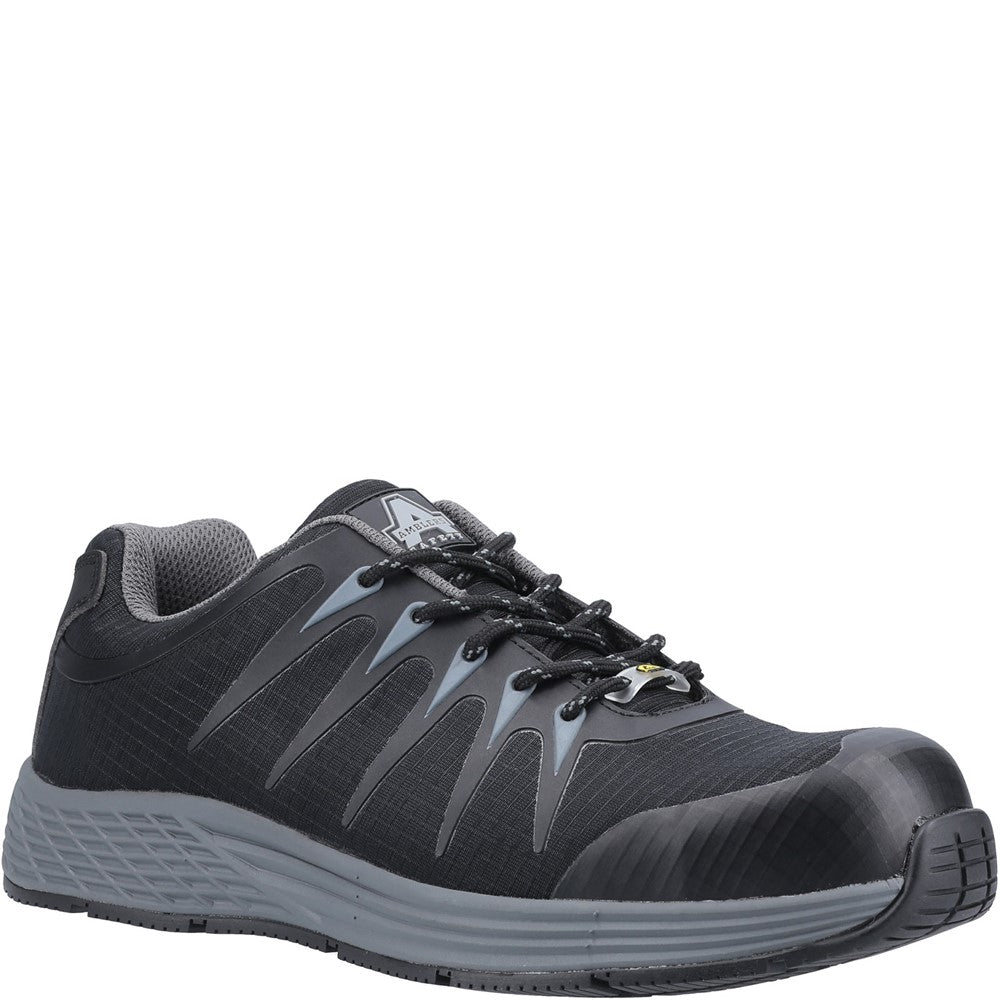
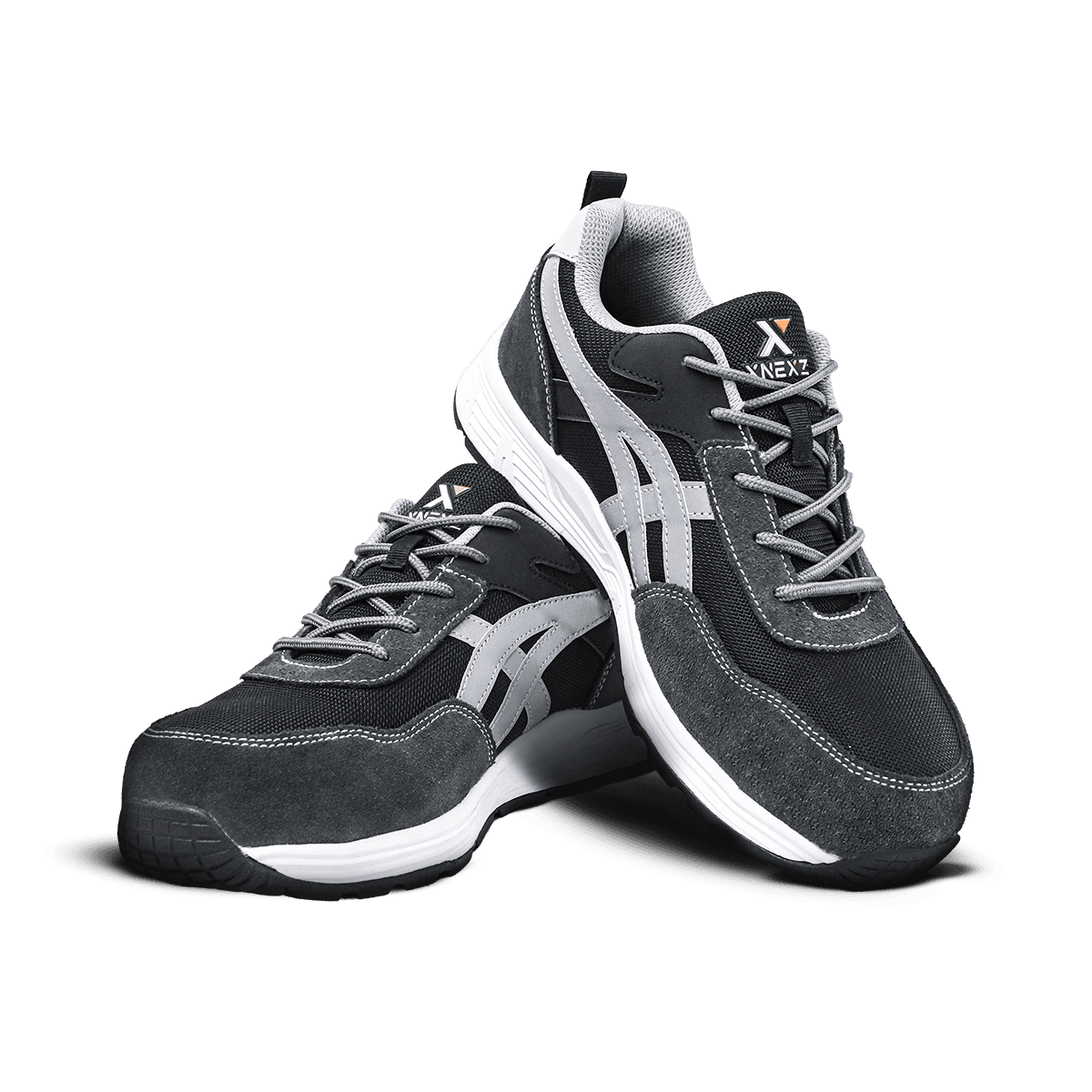
Two lightweight, metal-conscious S1P trainers for light indoor work — compared honestly below.
What's the difference between the Amblers AS717C and Xnexz StrideX?
On the surface they're near-twins: both are low-cut, lightweight, vegan-friendly safety trainers with a 200-joule toe cap, a 1,100N puncture-resistant midsole, breathable synthetic uppers and cushioned EVA-based soles. Both are pitched at the same job, light indoor work like warehousing, logistics, catering and retail.
The differences are in the certifications and the fine print. The Amblers adds ESD and the top SRC slip rating, uses composite for both the toe and the midsole, and undercuts the StrideX on price. The StrideX answers with the newer 2022 certification standard, a Kevlar midsole, and more generous consumer terms. Here's how the categories fall:
Honest tally: Amblers leads on ESD, SRC, metal-free build, price and sizing; the StrideX leads on the current standard and consumer terms. The midsoles tie on protection.
Are both trainers genuinely metal-free?
Both are marketed as metal-conscious, but they aren't equally metal-free, and it's worth being precise.
The Amblers AS717C is fully non-metallic: a composite toe cap and a composite anti-penetration midsole, with no metal components. The StrideX pairs an aluminium toe cap, a light, non-ferrous metal, with a non-metallic Kevlar midsole. Both hit the same 200J impact rating and both are far friendlier around detection gates than a steel-toe shoe. But aluminium is still a metal, so for a strictly metal-free requirement the Amblers composite toe is the cleaner answer.
- Amblers: composite toe + composite midsole = fully non-metallic throughout.
- StrideX: aluminium toe (non-ferrous metal) + non-metallic Kevlar midsole.
- Both: lighter than steel and detector-friendlier, but verify against your specific gate.
If your site runs strict metal detection, the Amblers has the edge. Our guide to aluminium vs composite vs steel toe caps breaks down how these materials trade off on weight, cold transfer and detection.
Composite vs Kevlar: which midsole protects better underfoot?
Both shoes stop a nail driving up through the sole, and both are certified to the same minimum 1,100N puncture resistance, so on raw protection, this is a genuine tie. The difference is the material behaviour.
The Amblers uses a composite plate insert; the StrideX uses a woven Kevlar (para-aramid) insert. Both are non-metallic, both flex better than a steel plate, and both keep the shoe light and cold-neutral. Kevlar is a recognisable premium aramid known for flexing with the foot, but on certified performance the two are equivalent at the 1,100N threshold. Neither has a meaningful protection advantage here.
| Midsole | Amblers — Composite | StrideX — Kevlar |
|---|---|---|
| Puncture rating | 1,100N minimum | 1,100N minimum (PL) |
| Metal content | None | None (midsole) |
| Flexibility | Flexible plate | Woven, flexes with foot |
| Cold transfer | Does not conduct | Does not conduct |
Both meet the same standard. See Kevlar vs composite midsole for how the two materials differ in feel and durability.
Does ESD certification matter - and which trainer has it?
This is a clear, honest win for the Amblers. The AS717C is ESD-certified (electrostatic dissipative). The StrideX is antistatic (A), the standard property every S1P shoe carries, but it is not ESD-rated.
Standard antistatic footwear dissipates charge to prevent shocks and reduce ignition risk. ESD certification is a tighter, more tightly controlled standard for environments where even a small discharge can damage sensitive electronics, electronics assembly, semiconductor work, and some lab and medical settings. If your role requires ESD footwear, the Amblers meets that need and the StrideX, as currently certified, does not.
What do the slip ratings (SRC vs SR) actually mean?
Slip resistance is easy to misread, so here's the precise picture.
- SRA: grip tested on wet ceramic tile with detergent (kitchens, washrooms).
- SRB: grip tested on smooth steel with glycerol (oily, greasy floors).
- SRC: passed both tests: the most complete slip credential under the older standard.
The Amblers carries SRC, so it's proven across both wet and oily surfaces, a genuine strength if your floors vary. The StrideX carries SR, the slip marking under the newer 2022 standard, which reclassified how slip resistance is tested.
Both are certified for slip resistance; the Amblers' SRC simply names the two specific surfaces it passed. If contaminated-floor grip is critical, that's worth weighing, see our guide to non-slip safety shoes.
Does the 2011 vs 2022 standard make a difference?
The Amblers AS717C is certified to EN ISO 20345:2011; the StrideX to EN ISO 20345:2022+A1:2024. Both are valid, a shoe certified under the 2011 edition remains legitimately certified and safe to wear. The 2022 revision is simply the current one, updating areas including the non-metallic puncture markings (PL and PS) and the slip-resistance classifications.
For most buyers this isn't a dealbreaker; a well-made 2011-certified trainer protects you exactly as tested. But if you specifically want footwear proven to the latest published standard, the StrideX has the edge. Either way, the label tells you what the shoe was tested to, always worth a check. For a plain-English decode of every code, see EN ISO 20345 markings explained.
How do price, sizing and buying compare?
The Amblers is the cheaper shoe and the wider-fitting one, with a size range from UK 4 to 13, a real advantage for smaller and larger feet, and for mixed workforces. At £64.99 it undercuts the StrideX, though delivery is £3.99 (free over £75), so the gap narrows a little at checkout.
The StrideX costs more but bundles in free next-day UK delivery, a 90-day return window and a 1-year damage warranty, more generous consumer terms than a standard retail return. So the value question splits: the Amblers wins on sticker price and sizing; the StrideX wins on after-sales cover and delivery. Both are easy to buy online in the UK.
Which safety trainer should you choose?
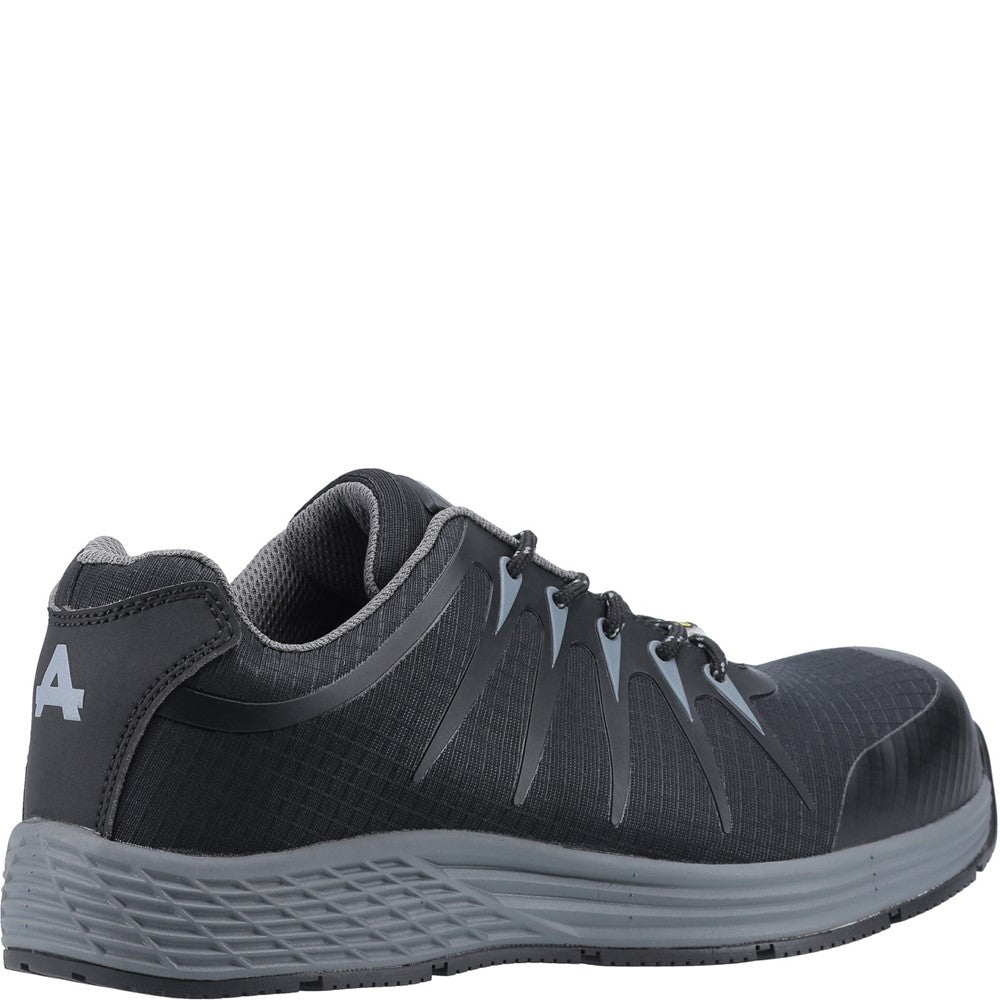
- You need ESD-rated footwear for electronics or sensitive work
- You want the top SRC slip rating for varied floors
- You want a fully non-metallic (composite) toe and midsole
- You need a size outside UK 6.5–11
- Lowest price is a priority
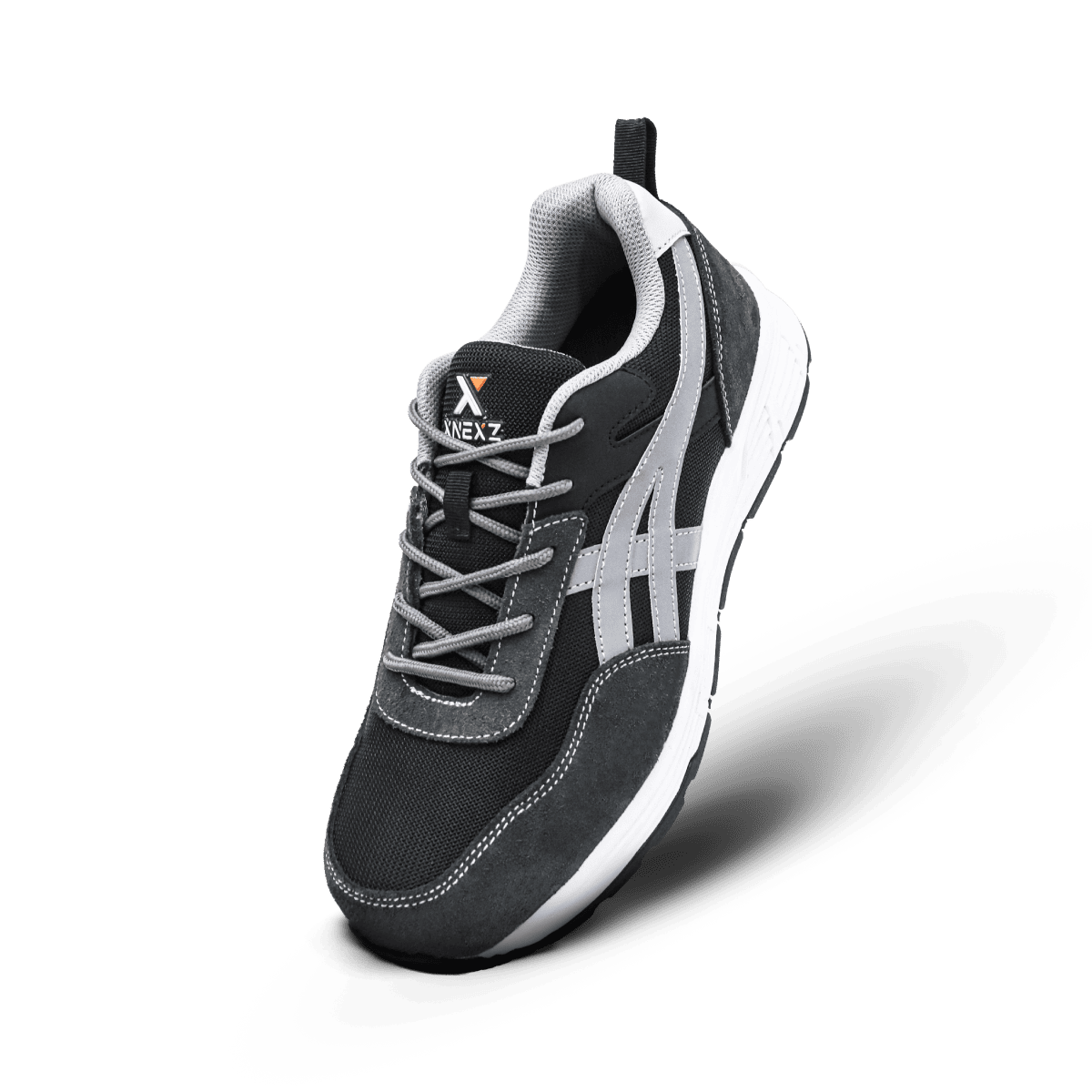
- You want footwear certified to the current 2022 standard
- You value a 90-day return and 1-year warranty
- You want free next-day UK delivery included
- You prefer a Kevlar midsole
- Standard antistatic and SR slip protection suit your role
If your employer's risk assessment mandates ESD, a fully non-metallic toe, or a specific slip grade, that requirement decides it regardless of price. Always confirm your site's PPE spec first, our S1P safety trainers buying guide covers exactly what to check.
Frequently asked questions
Is the Amblers AS717C better than the Xnexz StrideX?
On value and certifications, the Amblers leads, it's ESD-rated, SRC slip-rated, fully non-metallic and cheaper. The StrideX counters with the current 2022 standard and stronger consumer terms. "Better" depends on whether you need ESD and SRC, or the newer certification and returns.
Are both trainers fully metal-free?
The Amblers is, composite toe and composite midsole, no metal. The StrideX uses an aluminium (non-ferrous) toe with a non-metallic Kevlar midsole, so it's mostly metal-free but not entirely. For strict detection gates, the Amblers is the cleaner choice.
Do they have the same puncture protection?
Yes, both midsoles meet the same 1,100N minimum. The Amblers uses a composite plate, the StrideX uses Kevlar; on certified protection they're equivalent.
Which is more comfortable for long shifts?
Both are lightweight, breathable and EVA-cushioned for all-day indoor wear. Comfort is personal, so try your usual size in your actual working conditions if you can.
Are these suitable for outdoor or heavy-duty work?
No, both are light-duty indoor trainers, not outdoor or heavy-industry boots. For wet, abrasive or rugged sites you'd want an S3-rated boot. Always follow your site's PPE requirements.
The verdict
The Amblers AS717C Baton is the stronger value shoe, and we won't pretend otherwise, ESD certification, the top SRC slip rating, a fully non-metallic build and a wider size range, all for less. If you need any of those, it's an easy call.
The Xnexz StrideX competes on a different footing: the current 2022 certification standard, a Kevlar midsole, and consumer terms an individual buyer feels day one, free next-day UK delivery, a 90-day return and a 1-year warranty.
No single winner here, it depends on what you need. For ESD, SRC, a fully metal-free build or the lowest price, choose the Amblers. For the current certification standard and stronger after-sales cover, the StrideX is built for exactly that, and you've got 90 days to decide on shift.


